Humidity and Your Piano — the North Yorkshire Edition
Why North Yorkshire's dry winters and damp summers knock pianos out of tune — and what to do about it. Room placement, humidifiers, Dampp-Chaser.
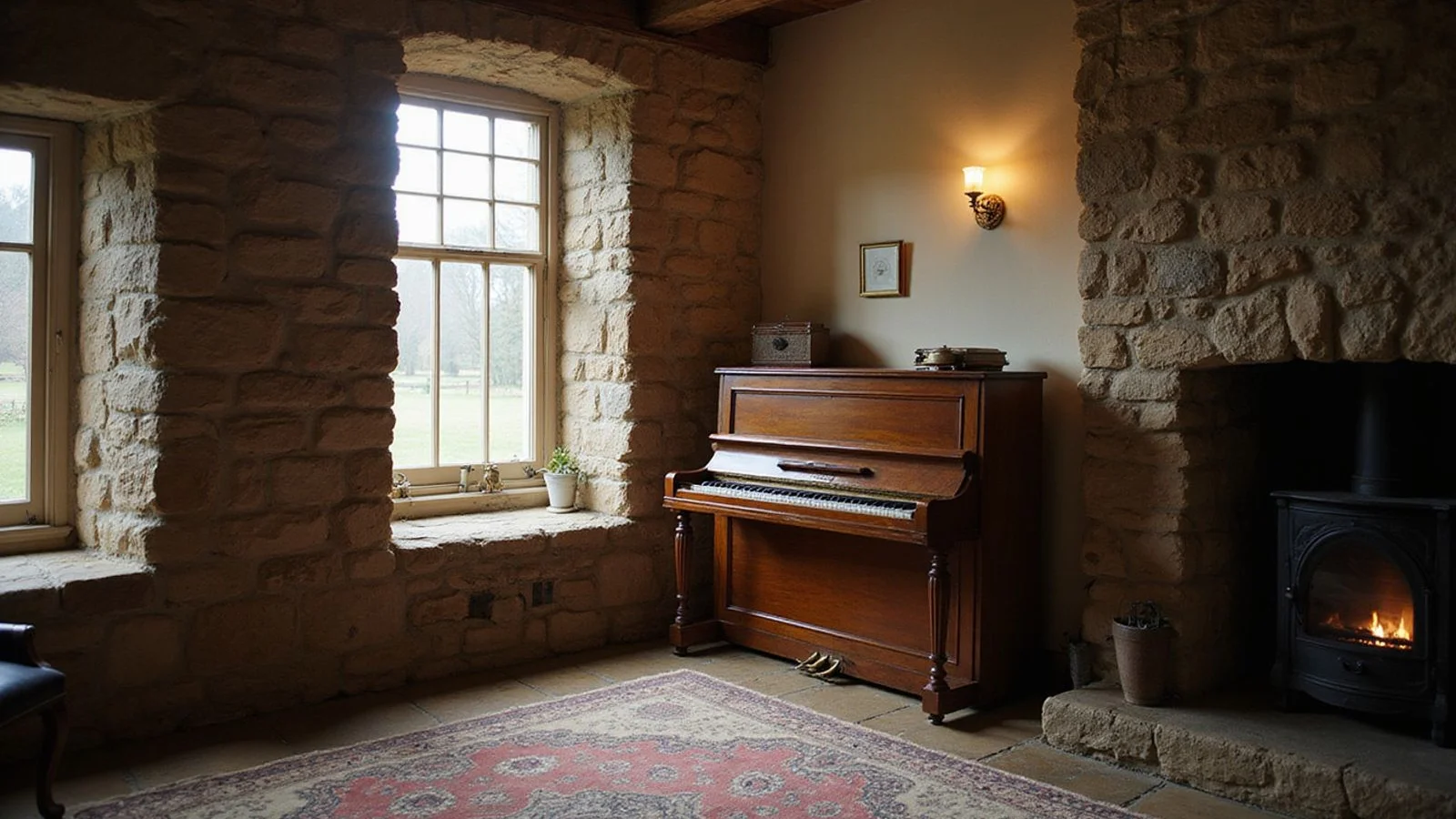
We see the frustration daily when a recently tuned piano slips out of pitch far too quickly. The culprit is almost always the moisture content in the air. Wood swells when the air is damp and contracts when dry, which pulls the soundboard out of shape and the strings out of tune. Much of our tuning and maintenance service work in the Dales comes back to exactly this seasonal cycle.
Our team knows that managing the piano climate UK wide is difficult, but when dealing with piano humidity, North Yorkshire presents a uniquely tough environment. Here is the practical guidance on managing this situation.
This guide breaks down exactly why pianos go out of tune and walks through the exact workarounds that professional technicians recommend.
What humidity actually does to a piano
Our technicians frequently explain that a piano is roughly 90% wood. The soundboard, bridges, pinblock, case, and keys are all subject to moisture movement. A standard piano soundboard is crafted from a large sheet of Sitka or European spruce roughly 3/8 of an inch thick. We find that this massive wooden speaker acts like a sponge for airborne moisture.
When the room air gets drier:
- The spruce soundboard contracts slightly and loses moisture.
- The crown, which is the gentle arch the soundboard sits in, flattens out.
- Decreased bridge pressure shifts string tension noticeably.
- The piano drops in pitch, usually starting in the middle octaves.
- Wooden action parts shrink, which can cause keys to rattle or click.
When the air gets damper:
- The spruce soundboard swells rapidly when humidity rises.
- The crown rises and pushes the bridge harder against the strings.
- Increased tension causes the piano to drift up in pitch.
- Excessive moisture also invites rust onto the copper-wound bass strings.
A swing from 30% relative humidity to 65% can shift an untreated piano by more than a full semitone. We consider an instrument under those extreme conditions to be effectively never in tune. Extreme swings can even cause the glue joints in the pinblock to fail completely. This structural damage is incredibly expensive to repair.
North Yorkshire’s climate challenge
Our local weather has a specific pattern that creates a uniquely tough environment for wooden instruments. Looking at recent 2026 climate data, outdoor winter humidity in areas like Harrogate often sits around 85%. The problem begins when that cold, damp outdoor air is drawn indoors and heated.
- Winter: Cold outdoor air holds very little actual moisture despite the high relative percentage. Central heating or modern underfloor heating bakes the indoor air dry. Typical indoor relative humidity drops to a dangerous 30 to 35% in heated rooms through January and February.
- Spring: Rapid temperature changes force heating systems to switch on and off frequently. Indoor humidity cycles erratically between 40% and 60%.
- Summer: The easy season is generally stable around 50 to 60%.
- Autumn: Heating comes back on after a damp period, causing the biggest relative humidity drop of the year for most rooms.
We consider the two transition seasons, autumn and spring, to be the absolute hardest on pianos. This harsh reality explains why a tuning calendar books heaviest in October, November, April, and May. The rapid atmospheric transition forces the wood to move faster than the steel strings can stabilize.
What to aim for
Our professional recommendation is to target an ideal relative humidity range of 40 to 55%. Professional climate control systems, like the Piano Life Saver, are specifically calibrated to maintain a steady 42% micro-climate. Dropping below 35% for extended periods causes real structural damage, while sustained levels above 65% invite rust and sluggish keys.
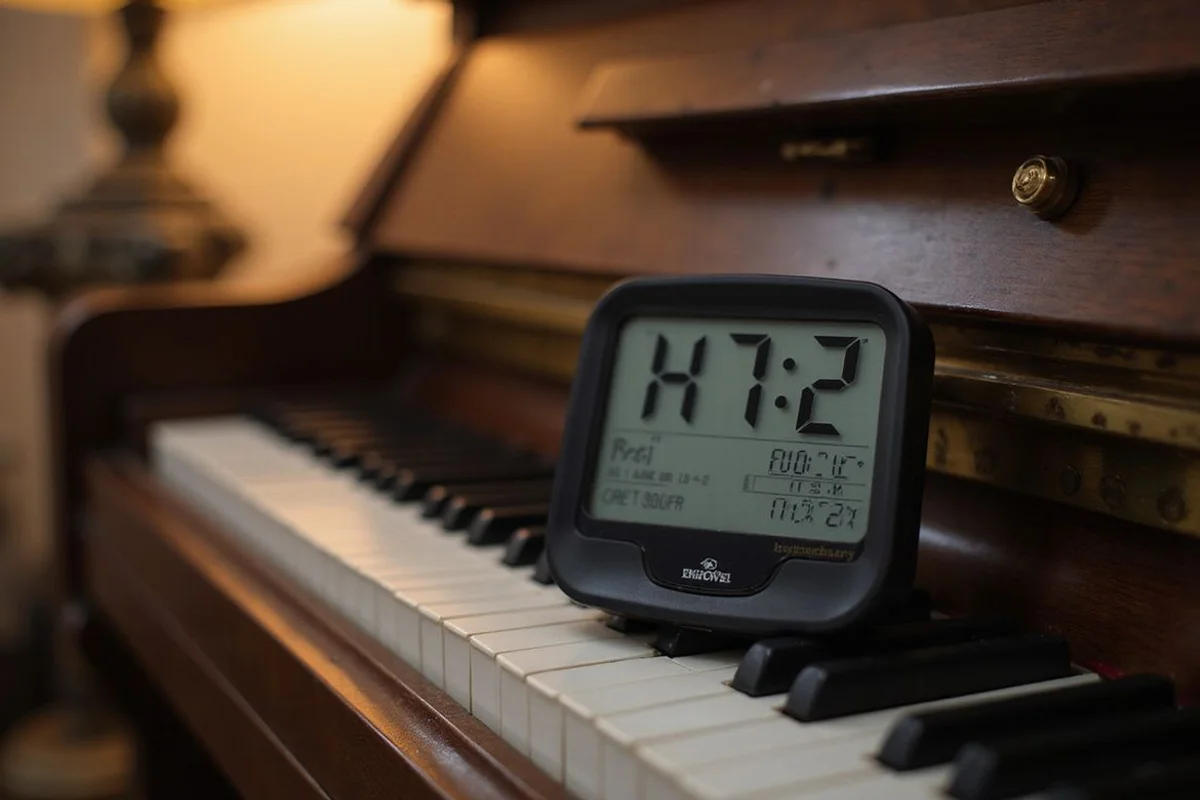
Our best advice for measuring this is to purchase a basic digital tabletop hygrometer. These simple tools cost between £10 and £20 at most UK hardware stores. Put the device in the piano room and check the reading once a week for a month to establish a clear baseline.
Solutions, from simplest to most involved
Our maintenance visits often reveal that solving humidity issues requires a stepped approach. You can start with basic room adjustments before moving to specialized equipment. The right choice depends entirely on how volatile your specific room is.
1. Room placement
We always check where the instrument is sitting before suggesting any technical fixes. An internal wall in a room with a stable, moderate climate provides the safest location. You should immediately move your instrument away from these common hazards:
- External walls. Temperature and moisture levels fluctuate most dramatically near outside walls.
- Radiators and heating vents. Even a few feet of proximity will bake the soundboard.
- Direct sunlight. Solar gain heats the case and accelerates wood drying.
- Fireplaces and wood burners. Heat and combustion both aggressively dry the air.
- Underfloor heating zones. This modern UK home feature acts like a slow cooker for the wooden pinblock.
2. Room humidifier
Our preferred first step for rooms that swing seasonally is adding a cool-mist room humidifier. Running this device through the winter solves the bulk of the problem for most spaces. Simply fill the tank once a day and aim to bring the winter indoor humidity up into the safe 40 to 50% range.
Our calculations show the running costs to be very small, often just a few kilowatt-hours per week. The instrument benefits substantially from this gentle, consistent moisture addition. Finding a quiet humidifier ensures it will not interfere with your playing.
3. In-piano Dampp-Chaser system
We highly recommend an internal humidity control system for pianos in particularly volatile rooms. A Dampp-Chaser, often branded as the Piano Life Saver system, is fitted directly inside the case. This smart device monitors local humidity and either humidifies or dehumidifies the air immediately around the strings and soundboard.
Our UK installation pricing for a Piano Life Saver typically ranges from £495 to £550 for an upright model. This system keeps the piano in a stable 42% micro-climate regardless of what the rest of the room is doing. The investment pays back in tuning stability, longevity, and a piano that plays beautifully for decades longer.
4. The twice-yearly tune as insurance
We advise clients that consistent maintenance is the best ongoing defense against climate shifts. Whatever else you do, a twice-yearly schedule catches the drift from seasonal moisture shifts before it becomes severe. See our how often should I tune my piano guide for a detailed breakdown of scheduling.
What not to do
Our technicians have witnessed the expensive damage caused by common climate control mistakes. Avoiding these pitfalls is just as crucial as maintaining the right moisture levels. Please keep these strict warnings in mind:
- Do not put the piano in a conservatory. Even an insulated UK conservatory sees 20°C temperature swings and huge daily moisture changes. Pianos in conservatories typically show serious, irreversible damage within 3 to 5 years.
- Do not position it right next to a radiator. Any distance is too close. Even a full metre of clearance can warp a soundboard over a single winter.
- Do not use a portable dehumidifier near the strings. These machines dry the air aggressively and can strip a piano below 30% relative humidity in mere hours.
- Do not ignore a constant pitch-drop pattern. If your instrument goes completely out of tune between every visit, moisture is the reason and it requires a targeted solution.
The practical checklist
We use a simplified checklist to help owners track and manage their indoor environment effectively. Follow these steps to diagnose and correct your specific room conditions. Consistency is the absolute key to preventing long-term structural failure.
- Buy a basic digital hygrometer and sit it on the lid for a month.
- Check the readings in winter and summer to see what your room does naturally.
- Add a cool-mist room humidifier if your winter readings drop below 40%.
- Consider a Piano Life Saver Dampp-Chaser if the numbers are volatile in both directions.
- Tune the instrument twice a year regardless of the conditions.
We understand that balancing piano humidity Yorkshire wide is genuinely a bit more involved than in milder climates. The challenge is entirely solvable with a few sensible, data-driven habits. See also piano care basics for the wider home-care picture.