Upright vs Grand Piano
Sound, touch, floor space, and price compared. The honest guide to choosing between an upright and a grand piano for a home in North Yorkshire.
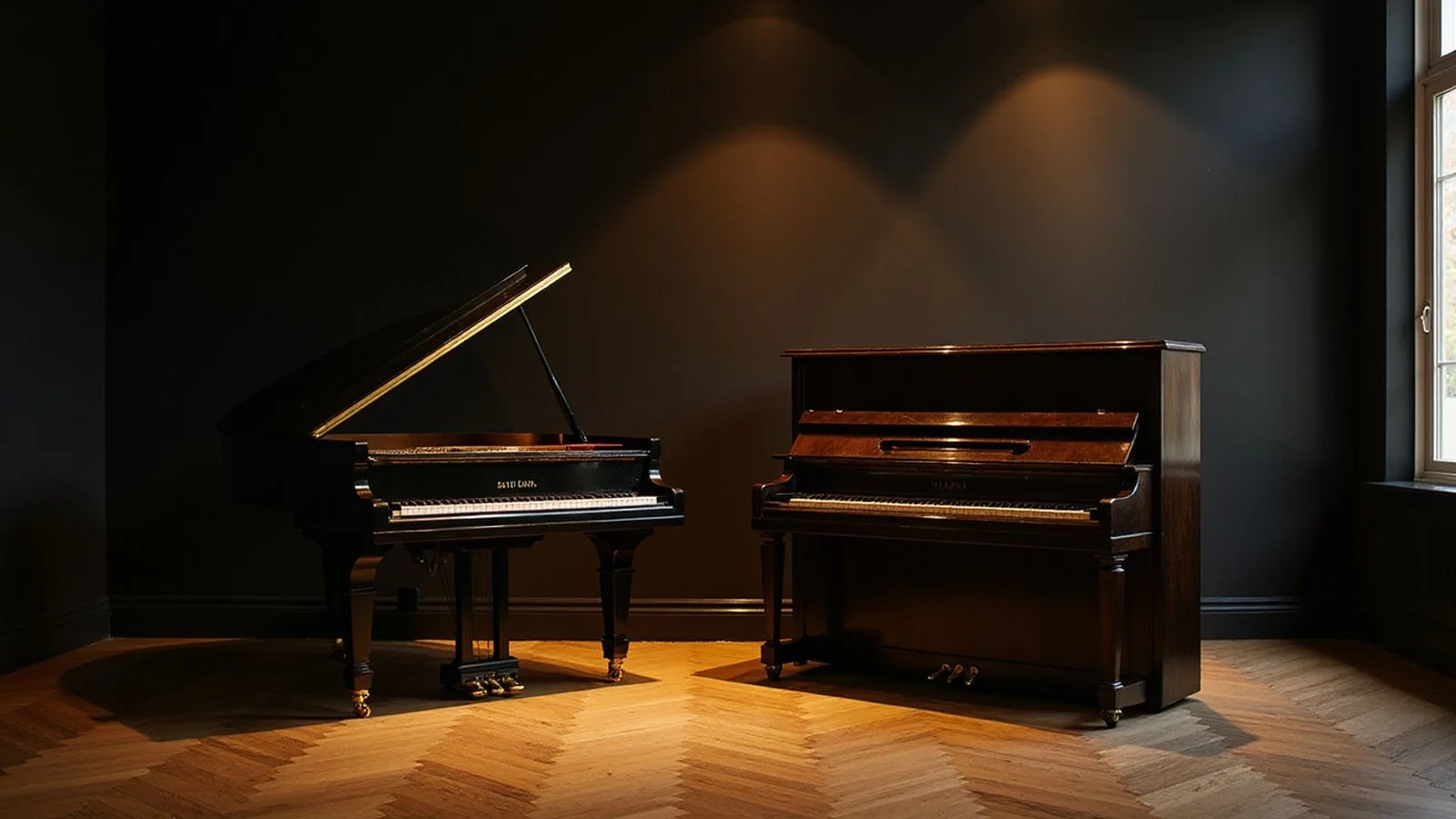
You know how many musicians assume comparing an upright vs grand piano is just about volume.
Our team speaks with players every day who hold this exact misconception. The reality is that the physical mechanics dictate completely different playing experiences.
We are going to break down the data behind sound, touch, footprint, and price. You can use this guide to pick the right shape first and the exact model second.
How they play: the action is the real difference
The physical mechanism, or action, defines how these two instruments respond to your touch. A grand piano features a horizontal action with a double escapement mechanism that uses gravity for rapid key resets.
We always tell clients that this brilliant invention by Sébastien Érard changes everything for advanced repertoire. A modern grand action can repeat notes roughly 14 times per second. You will notice a massive difference when playing fast trills or repeated notes.
Our technicians see a completely different engineering approach in upright pianos. An upright piano uses a vertical action that relies on springs rather than gravity. This single escapement design requires the key to travel almost completely back up before it can be struck again.
We know that a vertical action averages a limit of about 7 note repetitions per second. For intermediate playing or standard pop music, this mechanical ceiling goes completely unnoticed. Advanced players tackling complex pieces by Chopin or Liszt will feel the restriction.
Key Action Takeaways:
- Grand actions use gravity and double escapement.
- Grand repetitions reach about 14 notes per second.
- Upright actions use springs and single escapement.
- Upright repetitions average 7 notes per second.
How they sound
Longer strings, a larger soundboard, and a bigger cabinet all contribute to a richer tone on a grand. You get more bass body, longer sustain, and a wider dynamic range between soft and loud playing.
We find that many shoppers underestimate the sheer power of a premium vertical piano. A top-tier upright like a Yamaha U3 features a massive 131cm cabinet. This specific height allows it to house strings and a soundboard area comparable to a 170cm grand piano.
Our showroom comparisons consistently prove that a premium upright will easily match a basic baby grand for musical expressiveness. You also get superior tuning stability from the larger vertical frame.
To make a clear decision on sound, consider these specific factors:
- String Length: Longer strings create a warmer, deeper bass register.
- Soundboard Area: A larger wooden surface pushes more air for greater volume.
- Cabinet Resonance: Thicker rims and larger frames sustain notes longer.
- Baby Grand Limitations: Comparing a baby grand vs upright reveals that entry-level baby grands (like the Yamaha GB1K) often sacrifice string length for a smaller footprint.
We know that a premium full grand will beat both options comfortably. A high-end grand simply costs more than most households need to spend.
Footprint and room fit
The practical decision of choosing a grand vs upright usually comes down to your available floor space. The average new-build living room in the UK has shrunk to roughly 17.1 square metres, making footprint a critical factor.
We strongly advise measuring your room before falling in love with a specific instrument. Upright models live against a wall and take up significantly less square footage.
Our team uses these standard measurements for room planning:
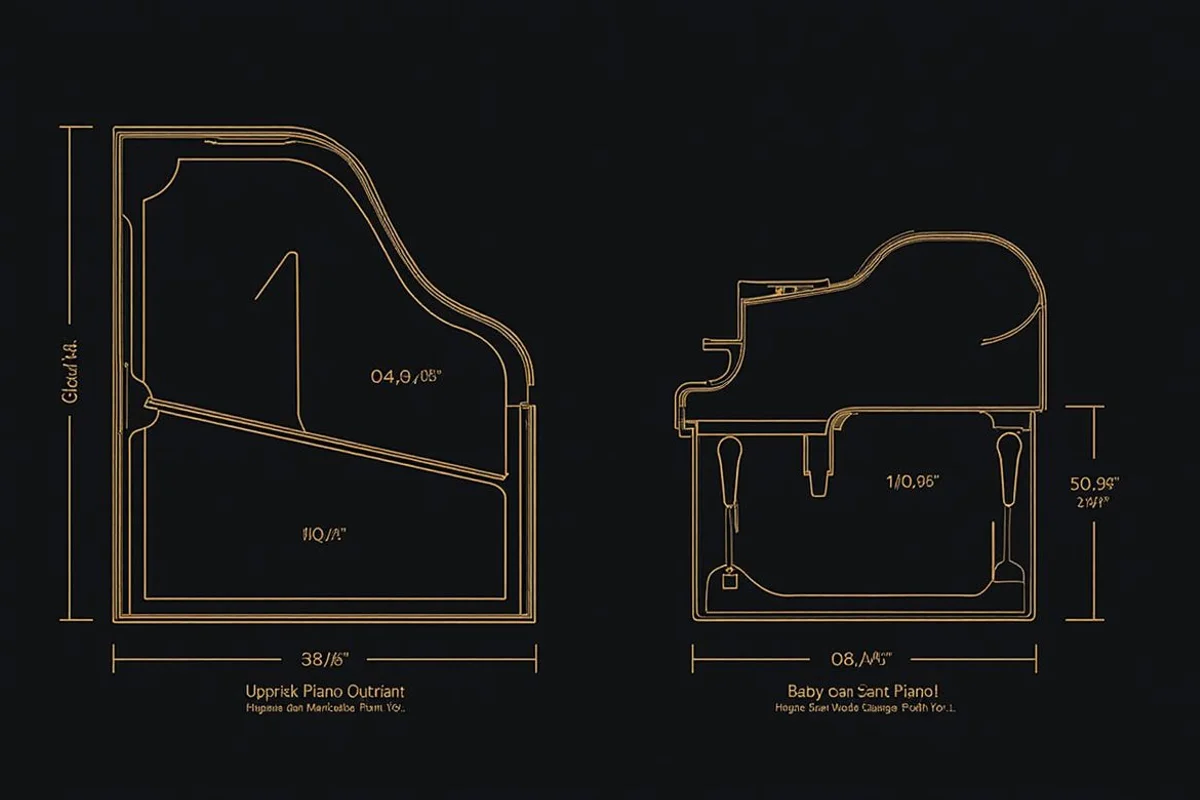
- Upright: roughly 150cm wide, 60cm deep, 110 to 130cm tall. Needs a metre of clearance in front for the bench.
- Baby grand: 150 to 170cm long and 150cm wide. Needs a standalone footprint, so plan 3.5m × 2m minimum to feel right.
- Full grand: 180cm+ long, often 190 to 210cm. Best suited for a dedicated music room or a large open-plan living space.
We see that classic Yorkshire housing stock handles uprights beautifully. Terraces, Victorian semis, and converted stone cottages often feature alcoves perfectly sized for a vertical frame.
Grands work best where you have a large reception room or a structurally reinforced space. A grand piano can weigh anywhere from 250kg to over 400kg, which means floor joists in older properties must be capable of supporting the load.
If you are in a smaller home, our guide on the best piano for small Yorkshire homes covers compact options.
Price at Keys & Co.
Your budget will heavily influence which piano for home use makes the most sense. Buying a piano is just the initial investment, as you must also factor in tuning, maintenance, and specialist moving costs.
We regularly update pricing based on our current stock at the Harrogate showroom. A brand-new vertical instrument offers excellent value, while restored grands provide a prestigious centerpiece at a lower price point.
Our typical price ranges for 2026 are as follows:
| Format | Typical price range |
|---|---|
| New entry upright | £2,500 to £4,500 |
| New premium upright | £8,000 to £12,000 |
| New baby grand | £8,000 to £16,000 |
| New full grand | £16,000 to £45,000 |
| Pre-owned restored grand | £3,500 to £6,000 |
We advise customers to budget for professional piano removals right from the start. Moving an upright locally within the UK typically costs between £150 and £300. Relocating a grand piano demands specialist dismantling and often costs between £300 and £800 depending on stairs and access.
Head to our new piano sales page for the full current range.
Who should choose which
Selecting the ideal instrument depends heavily on your repertoire, your living situation, and your long-term musical goals. You must weigh the mechanical benefits against the practical realities of your home.
We recommend a specific approach based on your unique circumstances.
Choose an upright if you:
- Live in a normal-sized room: The 17.1 square metre average UK living room restricts large footprints.
- Are buying a first piano for a learner: Entry-level vertical models offer the highest instrument quality per pound.
- Share walls with neighbours: Silent systems (like the Kawai AnyTime or Yamaha SILENT Piano) retrofit cleanly into vertical frames for headphone practice.
- Want easier relocations: Moving a 200kg vertical piano is much cheaper and less complicated than moving a grand.
We suggest moving up to a horizontal action for distinct reasons.
Choose a grand if you:
- Have the floor space and the budget: You need at least a 3.5m × 2m area and sturdy floor joists to support up to 400kg.
- Play advanced repertoire regularly: Fast repetition and double escapement are mandatory for high-level classical pieces.
- Want a visual centerpiece: The physical presence of a grand in the room is unmatched.
- Demand ultimate expression: You care about maximum dynamic range and nuanced pedaling.
The honest bottom line
We stock both styles because each serves a distinct purpose for different musicians. A quality upright at a given price almost always plays better than a baby grand at the exact same price point.
Our experts know that the true motivation for picking a grand is finding the specific instrument you want to play every single day. Hearing the upright vs grand piano differences in person makes the decision obvious.
We invite you to come and test both side by side in our private viewing rooms today.