Piano Care Basics
Simple, technician-approved guidance for keeping your piano playing well at home — placement, humidity, cleaning, and when to call a technician.
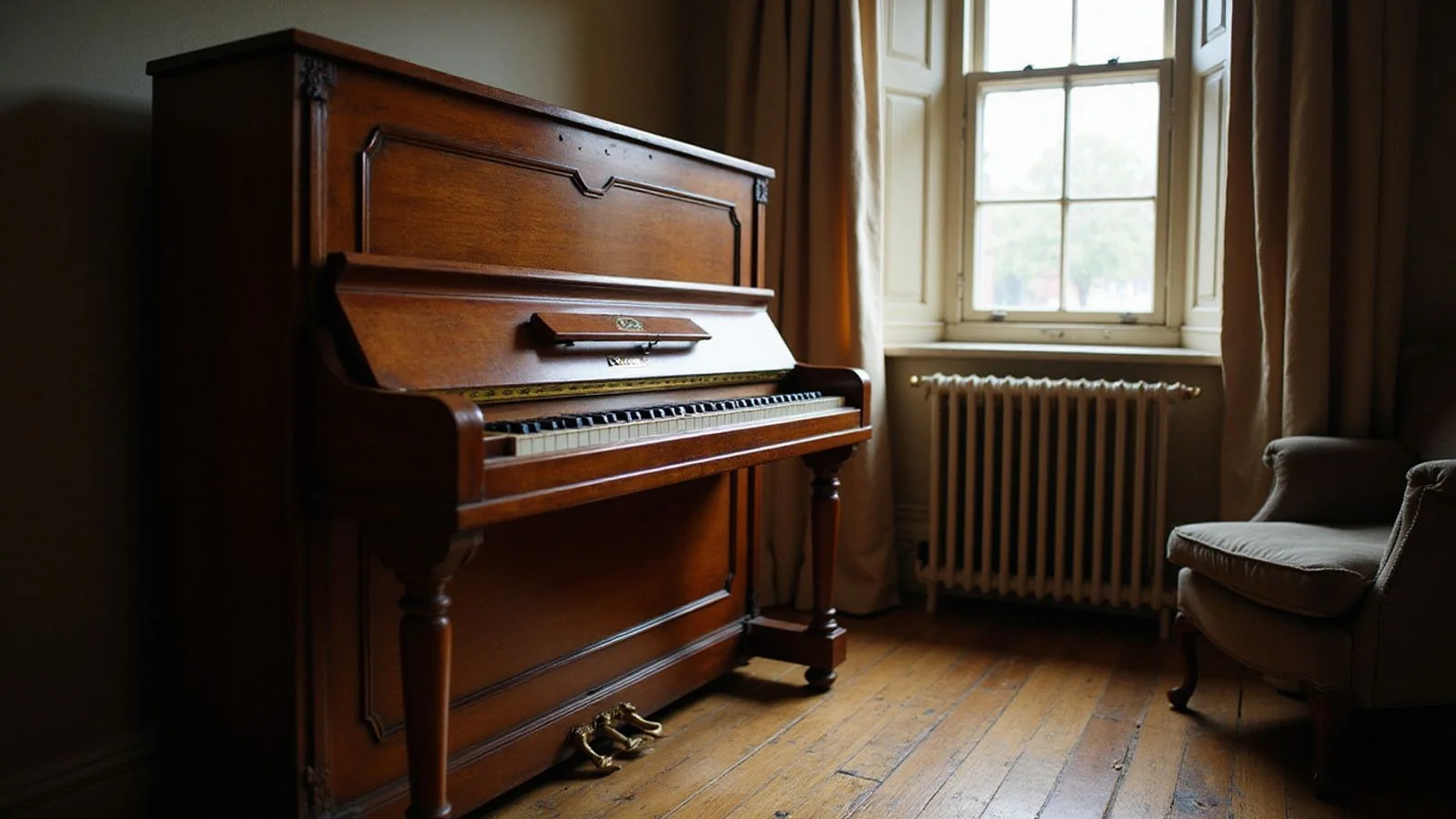
Our team consistently sees how a little proactive maintenance transforms the sound and lifespan of an instrument. You might assume that keeping a piano healthy requires specialist knowledge.
The reality is that true piano care basics are straightforward routines anyone can master. We are going to break down exactly where to place your instrument, how to manage the environment, and the daily habits that prevent expensive repairs.
If you have ever wondered how to look after a piano, these simple steps will protect your investment for decades to come.
Where to put it
We always advise clients to position their instrument against an internal dividing wall. External walls experience significant temperature swings throughout the British seasons. Choosing an interior space provides a natural buffer against these sudden weather changes. Our technicians frequently repair soundboards damaged by poor placement choices. You can easily avoid these costly issues by following a few strict location rules.
Keep the piano away from:
- External walls: These surfaces transfer cold air during winter and trap heat in summer, so always position the back of your piano internally.
- Radiators and underfloor heating zones: Modern UK homes and commercial venues often feature underfloor heating that bakes the piano from below. Aim for at least 1.5 metres of clearance from any direct heat source.
- Direct sunlight: UV fading on the cabinet finish is a minor issue compared to the structural damage caused by intense heat cycling expanding and contracting the wooden soundboard.
- Conservatories: These glass rooms act like greenhouses and will destroy an instrument rapidly. Never place your piano in a conservatory.
| Location Type | Examples | Stability Rating |
|---|---|---|
| Ideal | Dining room, interior study wall | Excellent |
| Acceptable | Living room away from windows | Good |
| Poor | Next to radiators, near drafts | High Risk |
| Harmful | Conservatories, against external walls | Guaranteed Damage |
Our preferred spot for any instrument is a dedicated music room or a quiet dining area. A stable environment drastically reduces the frequency of service calls.
Humidity, the most important thing
Our biggest challenge during winter service calls is dealing with severe moisture fluctuations. Wood requires a stable relative humidity of 40 to 55 percent to hold its shape. This natural material swells and shrinks continuously as moisture levels rise and fall in the air. We notice that central heating in UK homes during the colder months drops indoor moisture well below healthy levels. Recent 2026 climate data shows that average UK indoor humidity routinely drops to around 30 percent when heating runs constantly.
This rapid drying pulls the soundboard out of shape and instantly destabilises the tuning. Aim to monitor the climate daily to keep things stable. Readings below 35 percent or above 65 percent will eventually crack the wooden components.

Proven moisture control methods
We recommend a few reliable strategies to maintain the perfect climate. Mastering piano maintenance at home prevents thousands of pounds in structural repairs later.
- Use a smart monitor: Place a digital ThermoPro hygrometer directly on the cabinet so you know the exact current reading.
- Run a room humidifier: Introduce moisture back into the dry winter air using a dedicated evaporative unit.
- Install a climate system: A custom Dampp-Chaser Piano Life Saver system works beautifully to regulate moisture if your room is particularly volatile.
Our team wrote a longer piece on piano humidity in North Yorkshire with room-specific recommendations. This piano care guide covers how local weather patterns directly impact your maintenance schedule.
Cleaning the cabinet and keys
We often see beautiful finishes ruined by well-meaning owners using the wrong cleaning products. A gentle dusting with a soft, dry microfibre cloth is the only approach you need for weekly maintenance. Dusting the cabinet regularly removes surface dirt perfectly without risking damage. Our workshop strongly advises against using standard household chemical agents on the casework.
Avoid these common cleaning mistakes:
- Silicone furniture polish: Standard household sprays leave a cloudy residue that permanently damages polyester finishes.
- Alcohol-based solvents: These harsh liquids dry out plastic and ivory key tops, leading to brittle surfaces and cracking.
- Soaking wet cloths: Water marks high-gloss polyester finishes very quickly and moisture can seep down into the delicate action parts.
We suggest a very simple method for removing greasy fingerprints from the keys. Use a specialised product like Cory Key Brite for stubborn marks, or stick to a lightly dampened piece of clean cheesecloth. Wipe the affected keys gently and immediately follow up with a dry cloth to capture any residual moisture.
Why pianos need tuning even if you don’t play much
Our clients often ask why an untouched instrument still falls out of tune over time. The primary culprit is simple environmental change, which alters the massive 20-tonne string tension. A standard upright or grand experiences microscopic shifts in the wooden soundboard continuously, regardless of how often you practise. We explain to owners that even a tiny variation in room temperature instantly alters that delicate balance.
As the weather shifts throughout the year, the wood expands and contracts. This movement forces the tuning pins to shift, and the instrument will drift off its optimal concert pitch.
The ideal servicing schedule
We generally advise scheduling a visit twice a year to keep the pitch stable. A neglected instrument requires a much more expensive pitch raise process to correct the tension safely, often costing upwards of £150 in the UK today. Regular maintenance is remarkably affordable compared to major restorative work. Our tuning service currently runs at £85 per visit for regular customers. This small investment ensures your instrument always sounds bright, clear, and perfectly balanced.
| Usage Level | Recommended Frequency | Primary Benefit |
|---|---|---|
| New Pianos | 3 to 4 times in year one | Stretches new strings evenly |
| Home Use | 2 times per year | Maintains general stability |
| Heavy/Studio Use | Monthly or quarterly | Ensures flawless recording pitch |
Signs it’s time to call a technician
Our standard bi-annual visits usually catch minor mechanical problems before they escalate. You should reach out sooner if you notice sticking keys, strange buzzes, or obvious pitch drift. The action inside features thousands of moving parts made of felt, wood, and leather. We know from experience that small alignment issues can quickly ruin your playing experience.
Call an expert if you encounter these specific problems:
- Sticking keys: A note that feels heavy, doubles its strike, or fails to spring back up cleanly due to swollen bushing cloth.
- Obvious tuning drift: Chords that sound muddy or single notes that produce an audible, unpleasant waving beat.
- Unusual buzzes or rattles: Strange vibrations usually indicate a loose cabinet screw, a dropped pencil, or a broken damper.
- Pedal issues: Annoying squeaks, a lack of sustain, or a dampening mechanism that refuses to release properly.
We always remind clients that none of these symptoms are emergencies. You will find that a single routine appointment easily sorts out the vast majority of these mechanical quirks.
A short summary of piano care basics
Our final piece of advice is simply to stay consistent with your environmental checks. Following these fundamental piano care basics will reward you with decades of beautiful music. We compiled a quick checklist to keep handy for your daily routines.
- Place the instrument on an internal wall, far away from heat sources, and never in a conservatory.
- Maintain a room humidity of 40 to 55 percent by using a hygrometer and running a humidifier in the winter months.
- Dust the casework weekly with a soft dry cloth, completely avoiding any chemical sprays or polishes.
- Schedule a professional tuning twice a year, ideally using the same technician for consistency.
- Ring your technician early when a key sticks or a pedal feels off.
We guarantee that doing those five straightforward things ensures your piano performs brilliantly for the next forty years. Reach out today to schedule your next evaluation and keep your instrument in perfect condition.