How We Prepare Every Piano Before It Leaves the Showroom
Inside the workshop: inspection, action regulation, voicing, and final tuning by James before any piano leaves the Harrogate showroom.
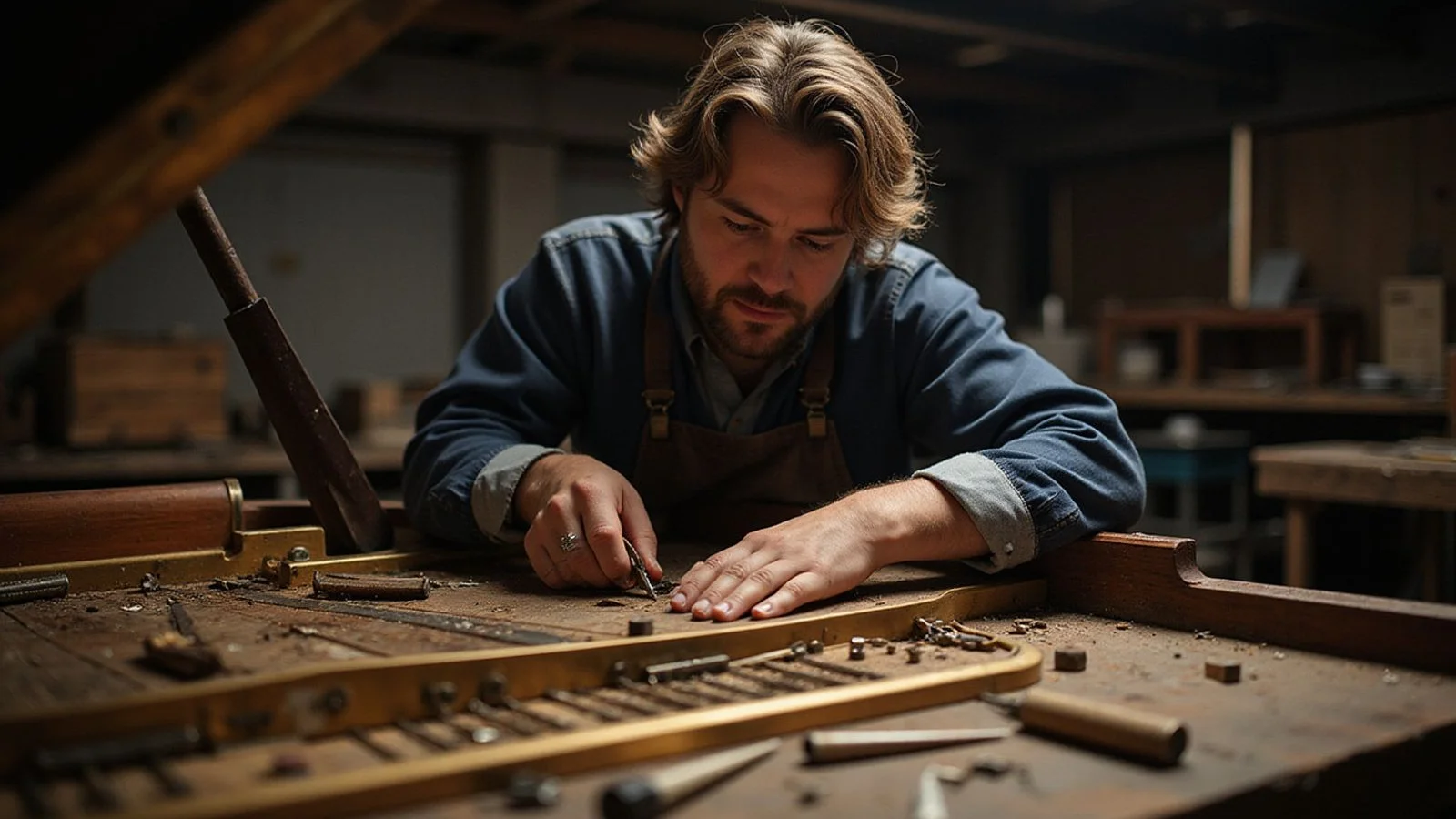
You probably know the disappointment of buying an instrument that sounds completely different in your home than it did in the showroom. We exist to prevent that exact scenario.
The secret lies entirely in proper piano pre-delivery preparation. We run every single instrument through our workshop before it ever sees the showroom floor. This process matters because an acoustic piano holds up to 20 tonnes of combined string tension and contains over 8,000 moving parts.
Let us walk you through the exact piano preparation process that guarantees your piano performs perfectly from day one.
Stage 1: Intake inspection
Every piano starts with a full intake inspection, whether it is a new Yamaha or a restored Kemble. We examine the structural integrity first. This step is crucial because the typical UK climate brings sharp indoor humidity drops during winter heating seasons, which can stress wooden components.
Our intake diagnostic covers three main areas:
- Soundboard integrity: Checking the wood through the back with an inspection torch to spot hairline cracks.
- Action mechanism: Verifying that all 8,000 moving parts operate smoothly without sticking.
- Hammer condition: Inspecting the felt for deep grooving or uneven wear.
For new pianos, this serves as a critical quality check. We verify that nothing has shifted in transit and the factory setup holds firm.
For pre-owned instruments, this is the definitive pass or fail moment. We simply turn down any piano with a loose pinblock or irreparable structural damage.
Stage 2: Action regulation
The action is the mechanical bridge between the key and the hammer. We spend hours on regulation, which is the process of adjusting this mechanism so every note responds evenly. A well-regulated piano prevents sluggish keys and allows for faster note repetition.
Our full regulation process covers four critical adjustments:
- Key dip: The depth each key travels when pressed. A standard measurement of approximately 10mm creates an even touch.
- Let-off: The exact point where the hammer escapes and throws itself at the string. If the let-off is too far, the tone sounds weak.
- Hammer alignment: Ensuring each hammer strikes its corresponding three strings squarely for maximum resonance.
- Damper timing: Adjusting the dampers so they lift and land in perfect sync across the keyboard.
Factory regulation on a brand new piano provides a solid baseline. We take it a step further in the workshop to account for environmental settling. Both new and pre-owned pianos exit this stage feeling noticeably more responsive than when they arrived.

Stage 3: Voicing
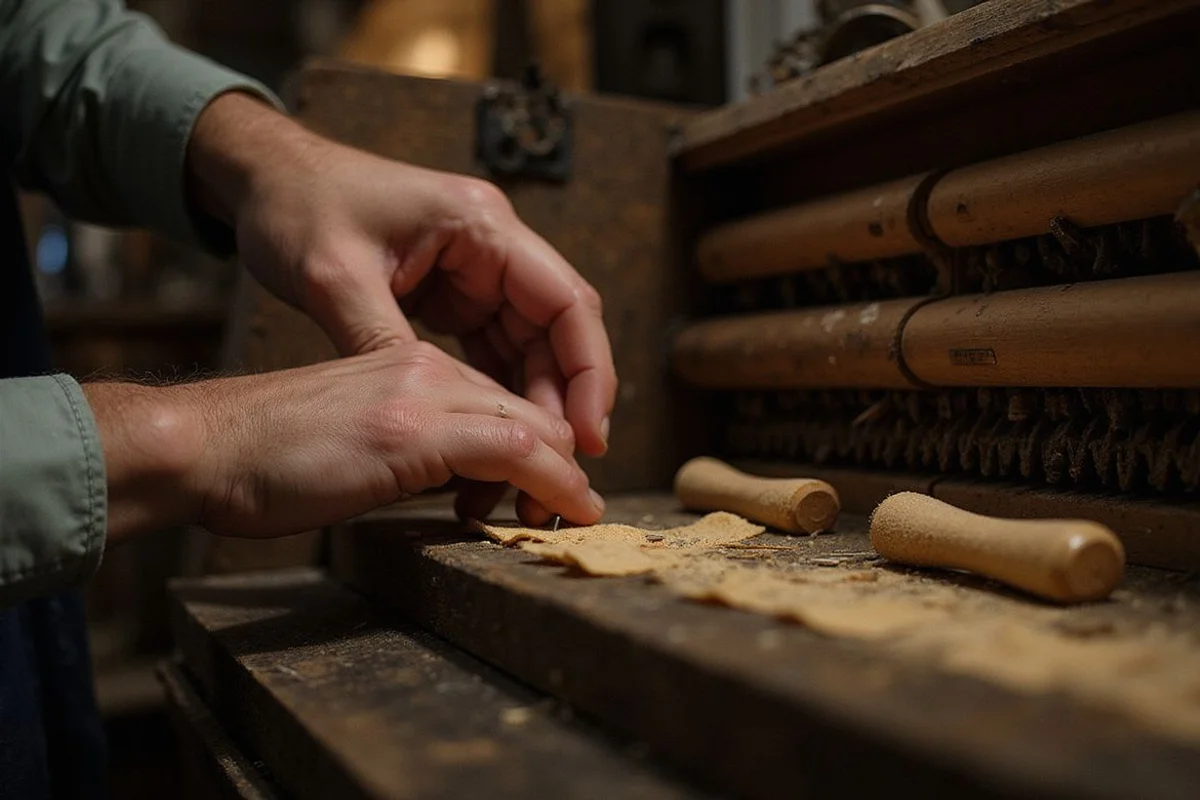
Voicing shapes the pressed sheep’s wool on the hammers to create an even, musical tone. We consider this one of the most transformative things a technician can do to an instrument. Done poorly, it can ruin the sound completely.
The tools remain incredibly simple. We use a set of voicing needles, a sanding file for shaping, and decades of trained listening.
Modern UK properties often feature hard flooring and minimalist furnishings, which bounce high frequencies around the room. We frequently use our needles to soften hammers on bright-sounding notes, adjusting the sound for these exact acoustic spaces. Conversely, notes that sound dull get a little shaping to recover their sharp attack.
| Instrument Type | Typical Time Required | Scope of Work |
|---|---|---|
| Brand New Piano | 15 to 30 minutes | Minor adjustments to a few select keys |
| Pre-owned or Restored | 2 to 4 hours | Extensive reshaping and needling across the board |
Stage 4: Final tuning and settling
Once the action is regulated and the hammers are voiced, James carries out a full aural tune to the concert pitch standard of A440. We then leave the piano sitting in the workshop for a couple of weeks. This resting period allows the strings and the heavy cast-iron frame to adjust to holding nearly 20 tonnes of tension.
A freshly tensioned piano will naturally drop in pitch as it settles. We perform a second fine tune right before the instrument moves to the showroom floor to guarantee stability.
When you purchase the piano, it leaves our facility fully tuned. We also include a complimentary post-settling tune at your property, typically four to eight weeks after delivery. This home visit is essential for two reasons:
- The wooden soundboard needs time to acclimate to your daily heating schedule.
- Your room’s specific indoor humidity levels will slightly alter the string tension.
Why this matters
There are two major reasons to care about this extensive piano workshop preparation. The most obvious benefit is that the instrument you bring home will sound and feel exactly the way it did in the showroom.
The second, less obvious reason is pure longevity. A piano that leaves the shop properly regulated, voiced, and tuned will hold itself together for decades. We constantly see rushed instruments develop sticky keys or tuning instability within just a few months of purchase.
If you are browsing our new pianos or our pre-owned range, rest assured that this preparation happens to every single instrument. This is exactly how we prepare pianos for a lifetime of beautiful music. We take a substantially more involved approach for vintage models, and you can read the specific details in our guide on how we restore pianos in our workshop.
Who does the work
James personally handles the preparation for every piano, every single time. We refuse to use external subcontractors, trainees, or a rotating cast of different technicians for different instruments.
Relying on one highly qualified pair of hands is the simplest and most effective quality control system available. We know exactly who adjusted your key dip and who tuned your strings, leaving zero room for miscommunication.
Reach out to our team today to schedule a showroom visit and experience the difference yourself.