Piano Buying for Families with Children
Matching a piano to your child's learning stage (beginner through Grade 8). Budget tiers, pre-owned vs new, and silent-piano practice solutions.
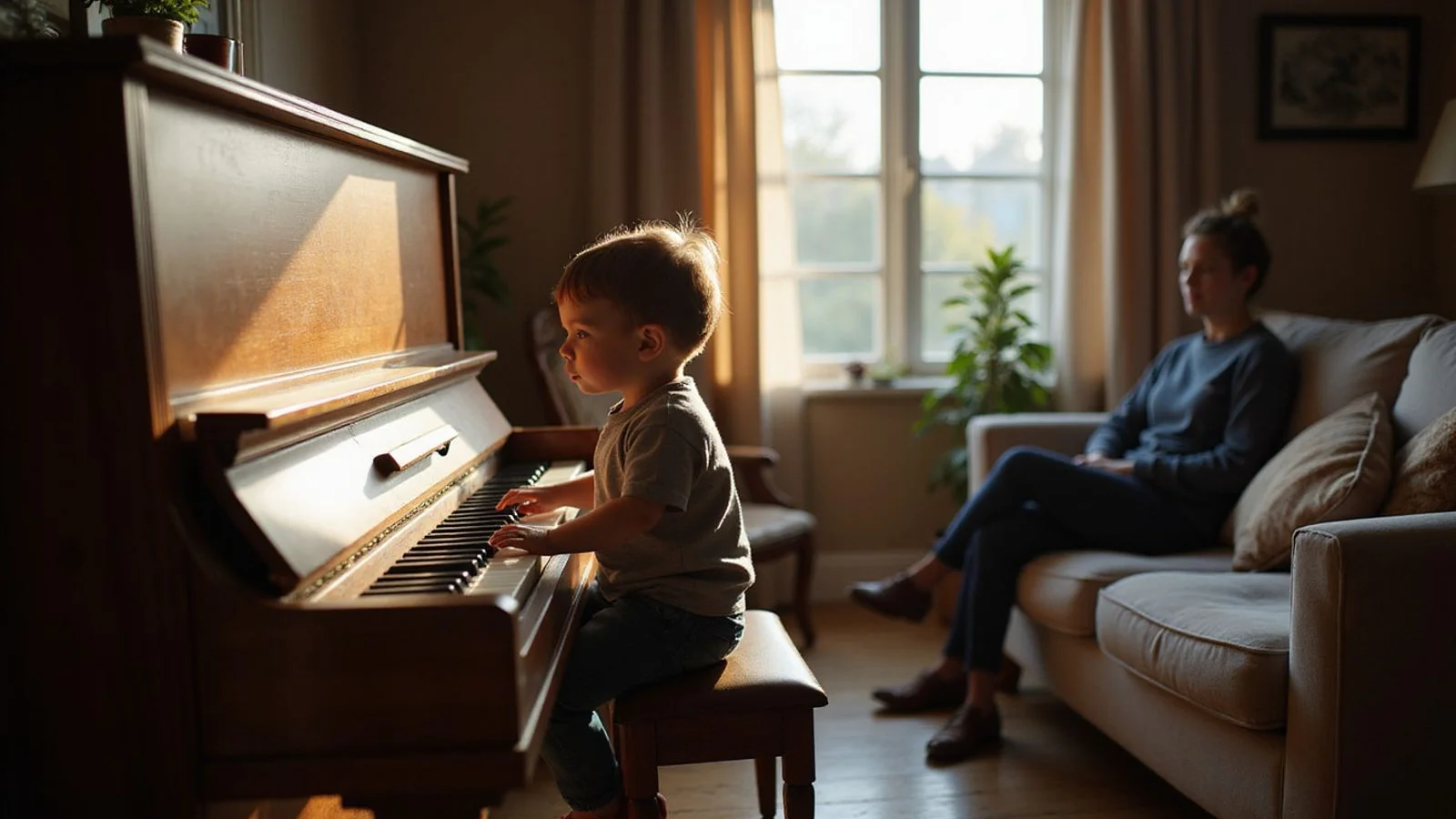
We often hear from parents who find the piano market confusing. The sheer number of options makes finding the best piano for children learning feel harder than necessary.
Our professional service team knows this is a tricky purchase. You are buying an instrument for a beginner who cannot judge it yet. ABRSM statistics show over 124,000 piano students take exams yearly in the UK.
We will break down the predictable stages of musical progress so you can match the perfect piano to your current needs.
Stages of piano learning
Most children move through piano education in predictable stages governed by examination boards like ABRSM or Trinity College London. Our experience shows that matching the piano to the current stage is the core of making a smart decision. Anticipating the likely next step makes the choice even clearer.
Pre-Grade 1 (ages 5-8 starting)
This initial stage focuses on keyboard recognition and independent hand use. The ABRSM Prep Test often aligns with this phase. We recommend a responsive acoustic as the ideal piano for child learning during these early steps. Digital keyboards actively hold children back because they lack a physical hammer action.
Our team notices that a child’s ear forgets to listen for dynamic tone without the 50 grams of tactile feedback an acoustic key provides. A real piano builds proper finger strength right from the very first lesson.
Grade 1 - 5 (typically ages 7-14)
Repertoire expands as students progress for Grade 5, making dynamic range significantly more important. We see children starting to notice distinct differences between instruments during this phase. A quality entry-level or mid-range upright piano sees them through this stage comfortably.
Our top recommendations here include the Yamaha B1 or the Kawai K-15E. The Kawai model features a solid spruce soundboard and ABS action parts. These materials make the instrument highly resistant to humidity changes in GB homes. We also frequently suggest a properly restored vintage upright as a highly capable alternative.
Grade 5+ and beyond
Instrument quality becomes a critical musical factor once a student passes Grade 5. We like to remind parents that achieving ABRSM Grades 6 through 8 provides valuable UCAS tariff points for university applications. A student heading for Grade 8 or a conservatoire requires a real musical partner.
Our showroom experts suggest stepping up to a premium upright like the Yamaha U1 or Kawai K-300 at this level. These studio-grade instruments provide the nuanced control needed for advanced classical or contemporary pieces.
Budget tiers for families
Family piano buying generally falls into four distinct budget tiers, ranging from £800 up to £12,000. We track the current GB market carefully to ensure families know exactly what to expect at different price points. Using current Keys & Co. prices, here is how the market breaks down.
| Tier | Price range | What you get |
|---|---|---|
| Stretch-a-family | £800 - £2,000 | Restored pre-owned upright. Good for beginners; may upgrade at Grade 3-5. |
| Sensible starter | £2,500 - £4,500 | New Yamaha B1/B2 or Kawai K-15E. Proper acoustic piano, will see Grade 5. |
| Middle ground | £4,500 - £7,500 | New Yamaha B3 / Kawai K-200. Serves through Grade 8. |
| Serious learner | £7,500 - £12,000 | Yamaha U1/U3 or Kawai K-300/K-500. Studio-grade instrument for life. |
Our finance team always encourages buyers to look into the UK “Take it away” scheme. This arts-backed initiative offers 0% interest financing up to £5,000 for children’s instruments.
We created a comprehensive pre-owned vs new piano guide to help you compare options at the same price point.
Why an acoustic is the best piano for children learning
An acoustic piano teaches the ear and the fingers vital musical skills that a digital keyboard simply cannot replicate. We firmly believe that the physical mechanics of a real instrument provide an irreplaceable foundation for a young musician.
- Dynamic sensitivity. Real hammers hit real strings. Quiet playing requires a completely different physical touch than loud playing. Keyboards simulate this imperfectly using sensors rather than mechanics.
- Finger strength. A traditional acoustic piano action requires specific muscle engagement. A child who grows up practising on an acoustic develops the strength to tackle harder ABRSM repertoire without hand strain.
- Tonal ear. A good acoustic piano produces complex overtones that reward careful listening. A digital speaker system flattens these natural acoustics.
- Motivation. Children naturally engage more with an instrument that produces rich, room-filling sound. This acoustic advantage keeps them practising longer.
The one honest use for a digital piano is as a quiet practice instrument alongside an acoustic, never instead of one. We see too many students hit a progress wall at Grade 3 because their home keyboard cannot handle complex dynamics.
Silent pianos for quiet evenings
A silent piano provides the perfect solution for busy households by combining a true acoustic action with digital headphone capabilities. We recommend this hybrid technology if you share walls with neighbours or have a partner working from home.
Systems like the Yamaha SH3 or Kawai AnyTime ATX4 allow the instrument to function as a normal acoustic piano during the day. Our families love that they can plug in headphones in the evening to silence the strings completely while still feeling the real physical keys. See our silent piano systems explained guide for a detailed breakdown of how this acoustic-digital pairing works.
The no-pressure family visit
Testing a piano for kids starting lessons should be an exploratory session completely free from aggressive sales tactics. We know families visiting the Harrogate showroom for the first time are often braced for a high-pressure pitch. They do not get one here.
Our team shows you the range, explains the differences, and sets up candidates in a private room. The child plays the instruments while you listen to the tonal differences. We leave you to it, and you come out to tell us what worked best for your family.
One customer, Sarah T. from Knaresborough, put it well: “James spent two hours helping us find the perfect piano for our daughter. No rush, no pressure. Wonderful experience.” Our goal is to meet that exact standard every single time.
A practical sequence
Buying a family piano follows a simple four-step process that prioritises the child’s physical connection to the instrument. We suggest following this proven sequence to ensure you make the right investment.
- Talk to the teacher and ask what specific models they recommend for the current syllabus.
- Set a realistic budget ceiling, making sure to add £500 for a proper bench and the crucial first delivery tuning.
- Visit the showroom with the child to let them physically test the key actions.
- Buy the piano that felt right to their hands, rather than simply choosing the one that looks best in the room.
That is the entire process from start to finish. We are always here to help you turn that process into a rewarding musical journey. Finding the best piano for children learning is a big step, so visit our showroom today to get started.