Are Pre-Owned Pianos a Good Investment?
How pianos depreciate differently to cars, how restored vintage can outperform new, and the real cost-per-year of ownership.
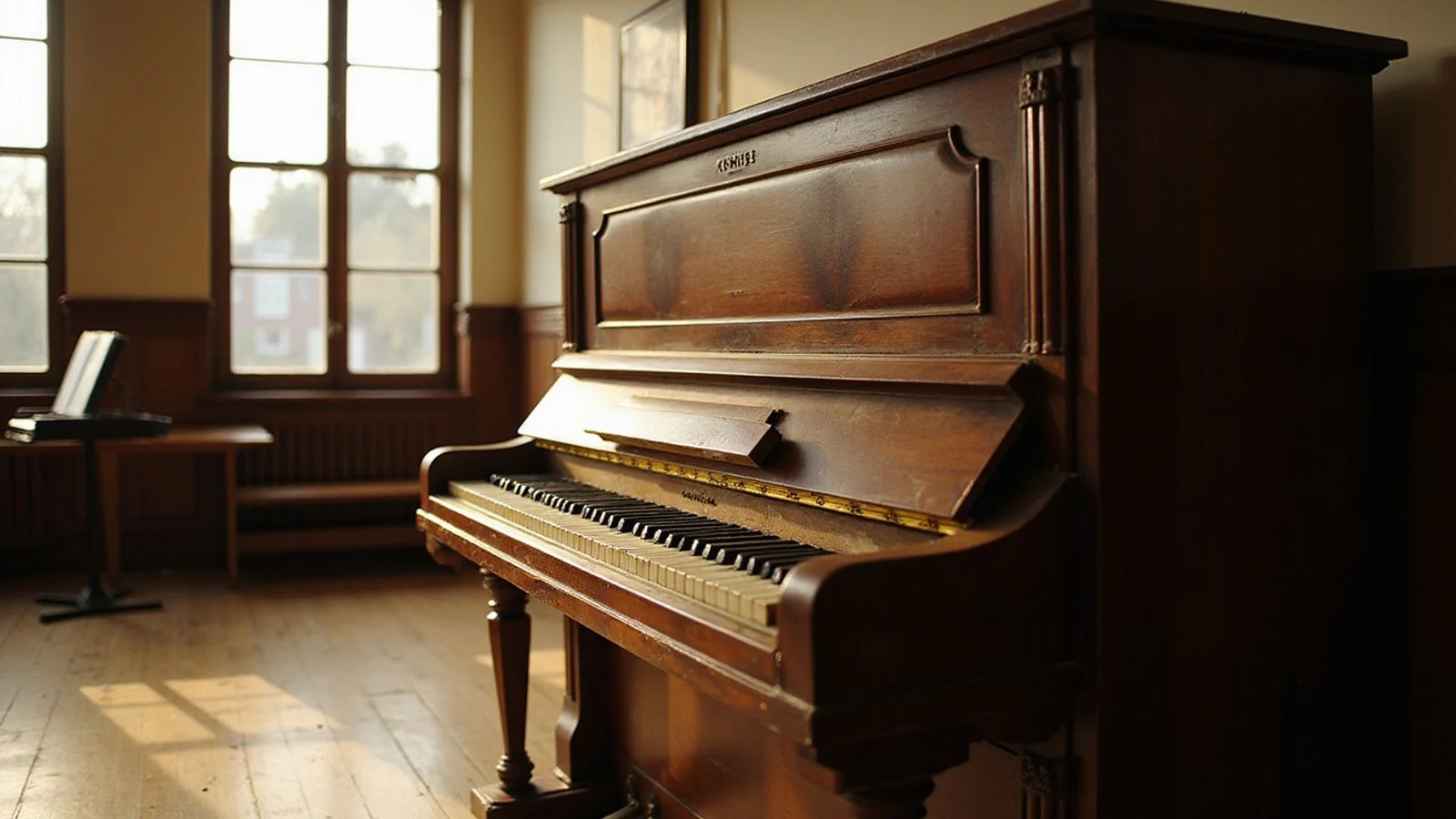
People often ask us, are second hand pianos a good investment? You probably already know that treating a standard instrument like a financial asset is a mistake. “Investment” is a misleading word applied to pianos, as they simply do not appreciate like gold or rare antiques. Spend a morning with our restored pianos and the real value proposition becomes clear. But they do something far more interesting for your household budget.
Our experience shows that high-quality acoustic instruments hold most of their value once the initial depreciation is out of the way. This changes the maths significantly for buyers.
When clients ask, do pianos hold value, we point to that stable middle period where the real financial benefit hides.
We are going to break down exactly how these instruments depreciate over time and explore the true cost of ownership. Let us look at the actual numbers, compare new models against restored classics, and show you exactly what to look for when buying.
How pianos actually depreciate: Are second hand pianos a good investment?
Pianos depreciate in a curve very similar to motor vehicles, dropping steeply at first before levelling out for decades. The biggest financial hit always happens in the first five years of an instrument’s life. We see this pattern repeated constantly across the UK market. A brand new Yamaha U1 costs around £9,500 today. Finding a restored 1980s U1 for roughly £3,500 is very common, which clearly illustrates the initial value drop.
This severe initial drop is exactly why pre-owned models offer such a compelling alternative. You are essentially shifting the newness tax to the original buyer. The depreciation timeline generally follows a very predictable schedule across the industry.
- Year 0 to 5: A rough 30 to 40 percent drop from the new price occurs here. The premium for buying brand new is substantial.
- Year 5 to 15: Values drift down by perhaps another 20 percent. Quality instruments typically bottom out around this point.
- Year 15 to 40: The value becomes remarkably stable. A well-kept upright from the 1980s is worth about the same now as it was twenty years ago.
- Year 40 onwards: Values depend entirely on condition and maintenance. A neglected instrument becomes nearly worthless, while a cared-for model holds value almost indefinitely.
Why restored often beats new at the same price
A restored vintage piano frequently outperforms a new entry-level model at the same price point. Buying restored gets you superior materials and a much richer sound quality for your money. We regularly walk clients through a direct comparison with a £4,000 budget. That exact amount buys two very different musical experiences.
To make the choice easier, look at what you get in the current UK market.
| Feature | New Entry Upright (e.g., Yamaha B1) | Restored Vintage (e.g., Kemble, Knight) |
|---|---|---|
| Typical Cost | £3,300 to £3,500 | £3,000 to £4,000 |
| Height & Sound | 109cm tall, lighter bass | 120cm+ tall, richer bass response |
| Soundboard | Laminated plywood | Solid spruce |
| Warranty | 5 years manufacturer cover | 12 months workshop cover |
For many players, the restored option delivers substantially more musical capability per pound spent. The warranty is naturally shorter on older workshop models compared to a factory guarantee.
However, older instruments carry a rich aesthetic history. The deeper resonance and superior playing experience still win out for serious musicians.
Resale behaviour of quality brands
Brand tier at the time of purchase dictates your ability to sell the piano later. Recognised names sell quickly, while obscure brands often cost more to move than they are worth. Our team constantly monitors second-hand market liquidity to advise buyers properly. The name on the fallboard is the biggest predictor of future resale success.
Knowing how different manufacturers perform on the secondary market helps protect your purchase.
- Yamaha and Kawai: These are highly liquid assets. Any well-prepared Yamaha U-series or Kawai will sell readily in the UK. This high demand makes them extremely valuable to own.
- Premium British (Kemble, Knight, Welmar): These models offer moderate liquidity. Brands like Kemble, which were built in Milton Keynes until 2009, maintain steady demand among knowledgeable buyers who appreciate traditional craftsmanship.
- Premium European (Bechstein, Blüthner, Steinway): These stay liquid at the correct premium price tier. These historic names hold their financial ground best over the long term.
- Unbranded or unknown makes: These are incredibly hard to sell. Obscure instruments are often worth only the removal cost.
If you plan to upgrade eventually, you must factor the brand tier into your initial decision. This helps in predicting your pre owned piano value later.
The real cost: cost-per-year of ownership
Viewing a piano through the lens of a cost-per-year breakdown reveals its true affordability. A quality acoustic instrument typically costs less annually than a basic streaming subscription. We use a simple formula to help clients see past the initial purchase price. Calculating the net cost over two decades provides a much clearer picture.
Let us look at a typical breakdown using current 2026 UK averages.
- Purchase price: £4,000 for a restored pre-owned upright.
- Ownership period: 20 years of active playing.
- Annual tuning: The UK average is £85 per visit. Two tunings cost £170 a year, totalling £3,400 over the 20-year period.
- Likely trade-in value: The instrument retains a value of £1,500 to £2,000 after 20 years.
- Net cost over 20 years: Roughly £5,400 to £5,900 in total.
- Cost per year of ownership: This averages out to roughly £270 to £295.
That annual figure is remarkably low for an acoustic instrument that sits in the home and brings daily enjoyment. It appreciates in personal meaning, even if the financial price slowly settles.
The Ripon Grammar example
Institutional buyers clearly demonstrate the financial advantage of choosing restored instruments over brand new ones. Schools and churches routinely stretch their budgets further by avoiding the initial depreciation hit. We recently provided a perfect concrete example of this strategy in action. A beautifully restored Kemble upright was placed in the music department of Ripon Grammar School in 2025 by our team.
This specific placement cost about half the price of the nearest new-upright equivalent. The school secured several key advantages:
- A highly durable instrument with a mature, rich tone.
- An expected lifespan of another 30 years in heavy institutional use.
- Genuine trade-in value retained at the end of its working life in the department.
For community halls and educational facilities, the restored route is almost always the right answer. The instruments withstand heavy daily playing while keeping capital expenditures low.
The short version
Many buyers ask us: are second hand pianos a good investment? Pre-owned instruments make the most sense for players who want maximum musical quality for their budget.
We always advise clients to consider the total cost of ownership rather than just the sticker price. Making an informed choice now saves significant money later.
Here is a quick summary of the main points to guide your purchase.
- Do not treat a used piano investment as a vehicle for guaranteed financial gain.
- Pre-owned models hold value exceptionally well once the initial depreciation is behind them.
- A restored vintage instrument often out-plays a new entry-level model at the exact same price.
- The brand tier is the single biggest predictor of your future resale success.
- Calculating the cost-per-year of ownership is the most honest framing for your budget.
Our pre-owned vs new piano guide breaks the decision down further if you are weighing the two directly.