How We Restore Pianos at Keys & Co.
Step-by-step: strip-down, action regulation, hammer work, string and damper replacement, case refinishing, final voicing. 40-80 workshop hours per piano.
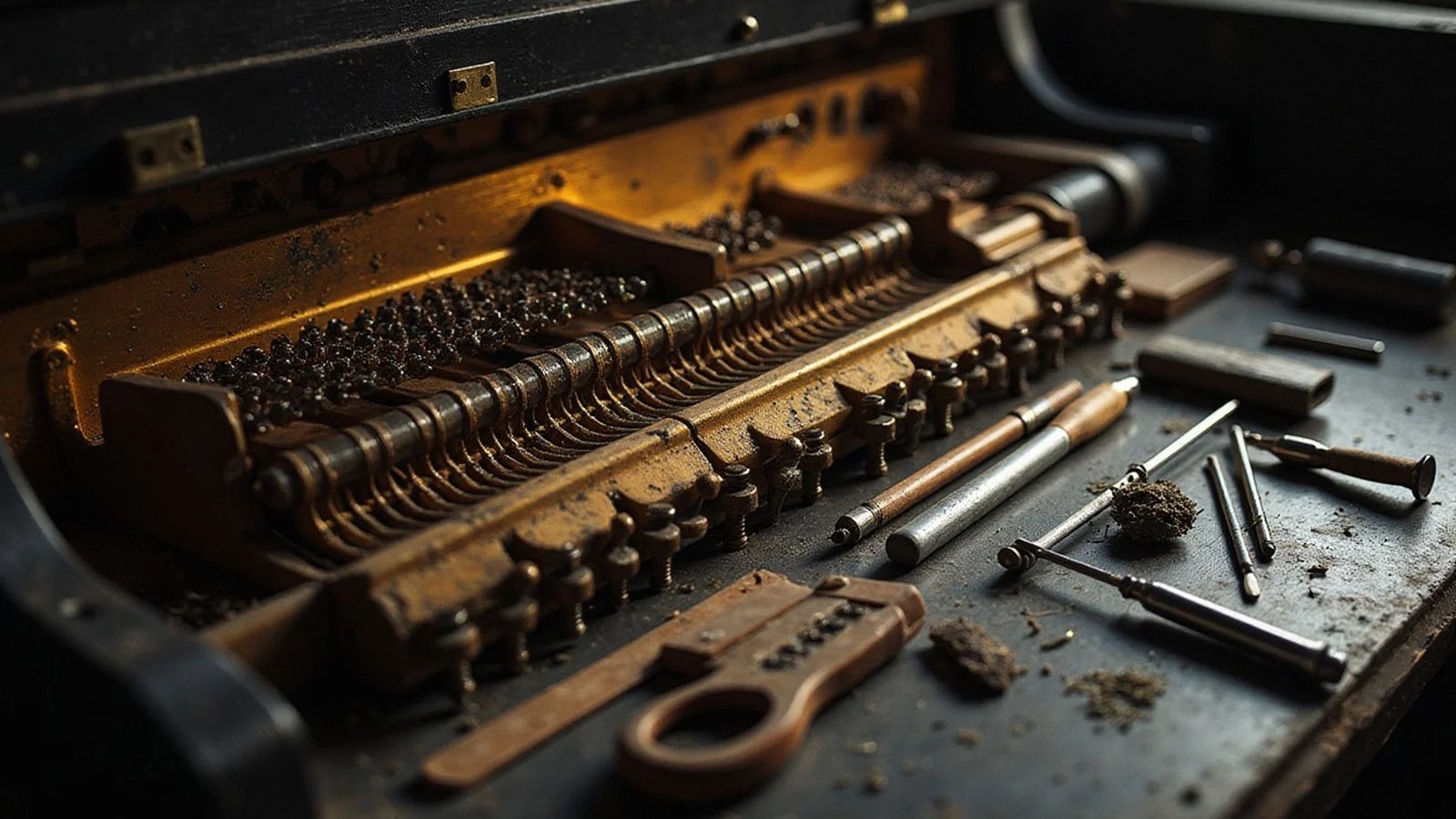
We see dozens of vintage uprights arrive at the workshop each year. Many homeowners assume a simple tuning will fix decades of neglect. Every instrument in our pre-owned range has already been through the process described below.
The reality is quite different.
Our team approaches the piano restoration process less like repairing a car and more like rebuilding one from the chassis up. You will soon see how pianos are restored by professionals.
This comprehensive work requires serious commitment. The job demands 40 to 80 hours of detailed, physical labour.
We will break down exactly what happens in the workshop when a vintage upright comes in for full restoration. Let’s look at the data, what it actually means for your instrument, and how the piano rebuild process unfolds stage by stage.
Stage 0: Intake and assessment
Our process begins with a strict go or no-go intake inspection led by James. This initial assessment determines if the instrument is structurally sound enough to survive a full rebuild. Pianos from the 1920s and 1930s often suffer from decades of central heating fluctuations in UK homes.
Our technicians look specifically for irreversible damage before accepting the job. The dry air causes the wooden components to shrink and crack over time. Every hour spent restoring a fundamentally compromised piano is an hour wasted.
We actively turn down instruments if they fail on these four critical points:
- Frame (iron harp): The cast iron must be fully intact with no cracks or heavy corrosion.
- Soundboard: Wood splits must stay within the limits of traditional shimming without total bridge separation.
- Pinblock: The wooden block must grip the tuning pins tightly without loose clusters.
- Structural case: The back frame cannot show severe warping or delamination.
Most of our intake rejections happen at this stage. A bad pinblock will prevent the instrument from ever holding a stable tune. It is simply better to be honest upfront than to charge for impossible fixes.
Stage 1: Full strip-down
Our team begins stripping the accepted piano down to its core components. This full teardown exposes the key bed, balance rail, and action mechanism for a closer look. A complete strip-down typically requires three to five hours of careful manual labour.
We remove hundreds of delicate parts during this phase. Sourcing replacements requires careful cataloguing of every original measurement. The technicians photograph and document the entire setup to ensure perfect reassembly later.
We execute the following steps to prep the chassis:
- Remove the action: The complex mechanism sitting between the keys and hammers is extracted carefully.
- Examine the key bed: The keys are lifted out to inspect the balance rail for warped wood.
- Extract the strings: Old wire is removed completely when a full re-string is planned.
- Inspect dampers and hammers: Individual assessments dictate which felt pieces require replacement.
- Document the configuration: Copious notes and photos capture the original geometry of the instrument.
Our workshop relies on UK-based suppliers like Fletcher & Newman in Borough Green for authentic replacement felts. Getting the right materials ready at this stage keeps the restoration moving smoothly.
Stage 2: Action regulation and hammer work
Our technicians consider the action regulation to be the absolute heart of the rebuild. This intricate mechanism contains hundreds of moving parts per key that must fire in perfect synchronisation. A full upright regulation routinely demands 15 to 25 hours on its own.
We address the heavy wear found on the hammers first. Deep grooves from decades of string contact ruin the tone of a vintage upright. The hammer felt either requires aggressive reshaping or a complete replacement using premium German Abel hammers.
Our focus then shifts to the supporting mechanics. The original wooden shanks often turn brittle and snap under heavy playing. Authentic Renner action parts are installed to guarantee another half-century of reliable performance.
We perform these specific regulatory adjustments across all 88 keys:
- New shanks and bridle straps: Brittle wood and compressed original felt are replaced entirely.
- Key levelling: The entire keyboard is balanced for a perfectly flat playing surface.
- Let-off and drop regulation: The escape point of the hammer is calibrated for consistent touch.
- Key dip adjustment: The downward travel distance of each key is mathematically set.
- Damper timing: The lifting and landing of the dampers are synchronised to stop ringing immediately.
Our strict attention to these millimetre adjustments transforms a sluggish keyboard into a highly responsive instrument. A great pianist can feel the difference instantly.
Stage 3: Strings, dampers, and tuning pins
Our stringing process is the most physically demanding stage of the entire restoration. The iron frame must endure over 20 tonnes of combined tension once fully strung. Technicians measure, cut, and fit each new string to its individual tuning pin by hand.
Our preferred material is Röslau polished German spring steel wire. This specific piano wire is universally recognised for its incredible breaking strain and bright tone. It easily handles the fluctuating humidity of a typical British living room.
We update the following tension components during a full restring:
- Treble and bass wires: Plain steel goes in the treble, while custom copper-wound wires supply the bass.
- New dampers: Fresh felt replaces compressed damper heads to guarantee a clean cutoff.
- Oversized tuning pins: Thicker pins are driven into the existing pinblock if the old holes have widened.
Our team brings the strings up to pitch very gradually over several days. The immense pressure must balance evenly across the cast iron harp to prevent sudden cracking.
Stage 4: Soundboard inspection and case work
We use the period when the strings are off to thoroughly inspect the back of the soundboard. The bare chassis reveals minor hairline cracks that are normally hidden from view. Wooden strips are carefully glued into these gaps to restore the acoustic integrity of the spruce.
Our technicians focus closely on the bridges where the strings transfer their vibration to the board. Loose bridge pins or separated wood will cause a terrible buzzing sound when played. Mechanics repair or re-cap these vital contact points before a single piece of wire is attached.
“A cracked soundboard might look terrible, but a separated bridge is what actually destroys the tone. Repairing the bridge contact is non-negotiable during a rebuild.”
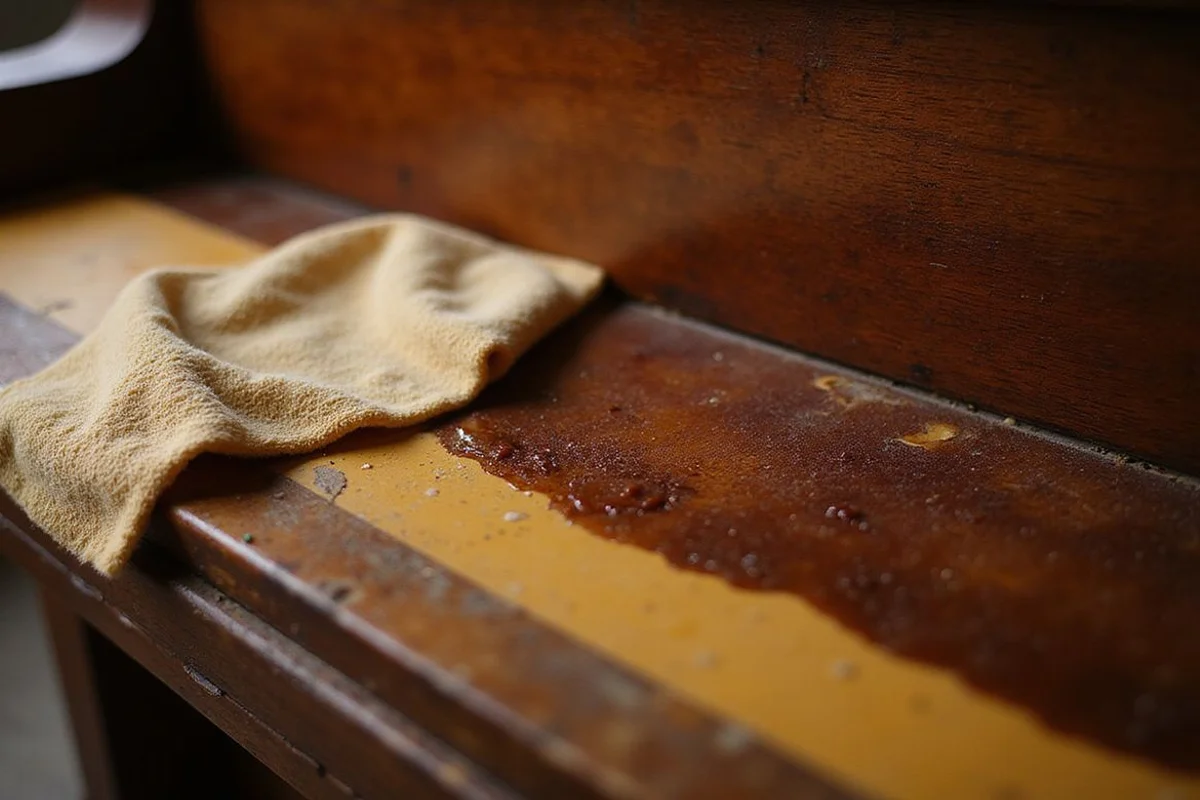
Our finishing department then addresses the external aesthetics. The tired cabinet is brought back to life using traditional French polish touch-ups. Visible case damage disappears under layers of fresh lacquer, completely refreshing the visual appeal.
Stage 5: Final voicing and tuning
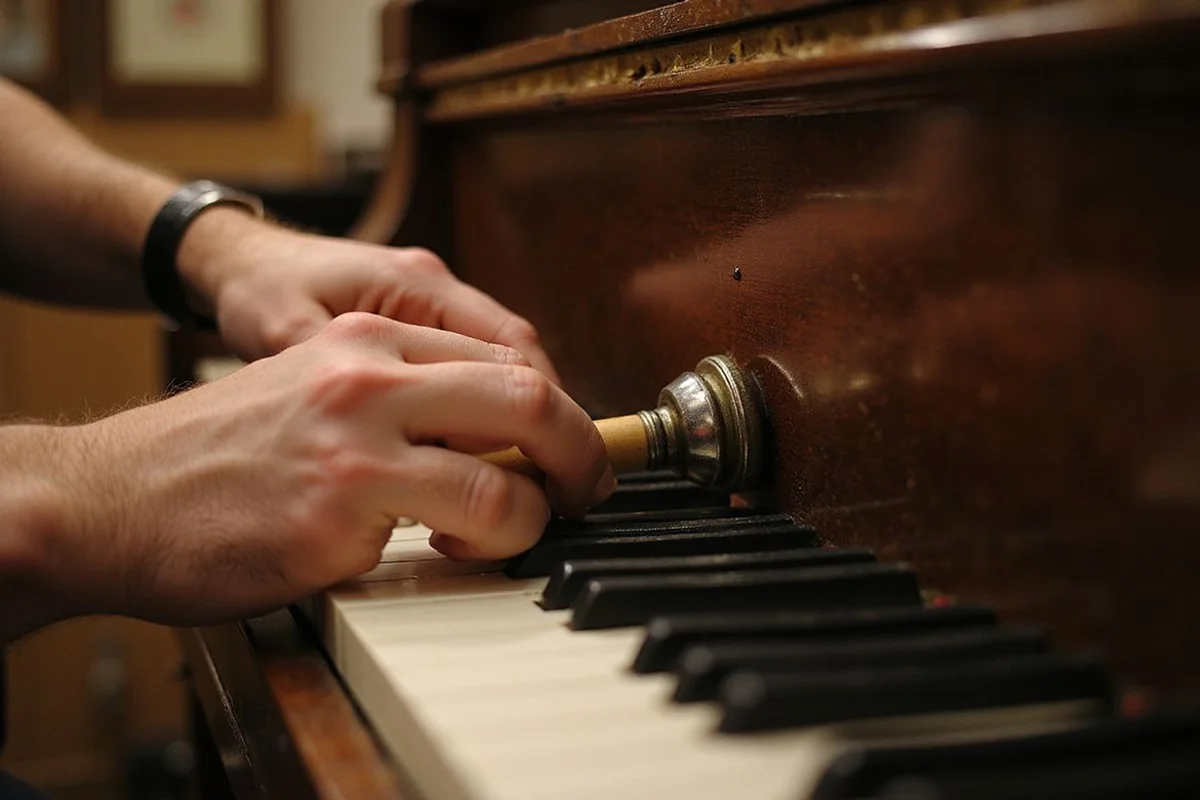
Our voicing process is the crucial step that turns a rebuilt machine back into a musical instrument. The brand-new hammer felts are extremely dense and initially produce a harsh, bright sound. James shapes and needles each hammer individually to soften the strike and balance the acoustic profile.
We perform the tuning and quality control in three distinct steps:
- Initial Pitch Raise: The instrument is aurally tuned to A440 concert pitch immediately after reassembly.
- Settling Period: The new Röslau strings are left for two weeks to stretch under their new 20-tonne load.
- Fine Tuning: A second pass locks the pitch in permanently once the metal has stabilized.
Our final quality check involves a rigorous play-through across the full dynamic range. Any remaining stiff keys or uneven dampers are corrected on the spot. The piano only reaches the showroom floor when it plays with genuine expression.
Brands we restore most often
Our workshop focuses almost exclusively on respected brands built for long-term endurance. The GB market is full of fantastic mid-century instruments that simply need professional intervention to shine again. Technicians look for heavy, solid construction that justifies the high labour costs of a rebuild.
Our top candidates for full restoration include:
- Kemble: These reliable British instruments were built in Milton Keynes until the factory closed in 2009. They offer excellent long-term tuning stability.
- Knight: This British manufacturer shares a similar pedigree to Kemble. They often feature a slightly smaller footprint perfect for modern homes.
- Steinbach: These pianos boast a rich German heritage. They are highly regarded for their durable construction and warm, resonant tone.
- Vintage Yamaha and Kawai: These legendary Japanese instruments age incredibly well. They usually require comprehensive preparation rather than a complete structural rebuild.
We advise clients to avoid sinking thousands of pounds into cheap, mass-produced starter pianos. The underlying materials are rarely worth the effort.
How long and how much
Our full restoration service typically runs between 40 and 80 workshop hours. The exact timeline stretches over 6 to 12 weeks depending on the complexity of the repairs. You will find that this intensive labour is the main driver behind the final invoice.
We see average 2026 UK costs sitting around £4,000 to £4,500 for a standard upright restoration. Larger baby grands jump to £6,000, while concert grands can exceed £10,000. This heavy investment is why a fully restored vintage upright costs significantly more than a lightly serviced second-hand model.
Cost and Value Comparison
Our pricing structure reflects the distinct difference between surface-level cleaning and comprehensive mechanical rebuilding.
| Service Level | Typical Cost (UK 2026) | Workshop Hours | Expected Lifespan |
|---|---|---|---|
| Light Refurbishment | £1,200 to £2,500 | 5 to 15 hours | 5 to 10 years |
| Full Restoration | £4,000 to £5,000 | 40 to 80 hours | 40 to 50 years |
If you are weighing the terms themselves, see restored vs refurbished piano. If you are wondering which pianos are candidates for restoration, see common problems in older pianos.
Commissioning a restoration
Our team occasionally accepts private commissions to execute a vintage piano restoration on a customer’s personal instrument. These are typically cherished family heirlooms or institutional pianos.
We always provide a transparent, realistic assessment before accepting the job.
The primary goal is to tell you honestly if the instrument is worth the workshop time. Send us clear photographs of the exterior case, the internal action, and the back of the soundboard. The serial number will also help us date the instrument accurately.
We will quickly determine the scope of the project and calculate a realistic cost.
Contact our workshop directly today to start your free evaluation process and see if your piano is ready for a second life.