Common Problems in Older Pianos
The problems we see most often in older uprights and grands — sticking keys, loose pins, cracked soundboards — and which are worth fixing.
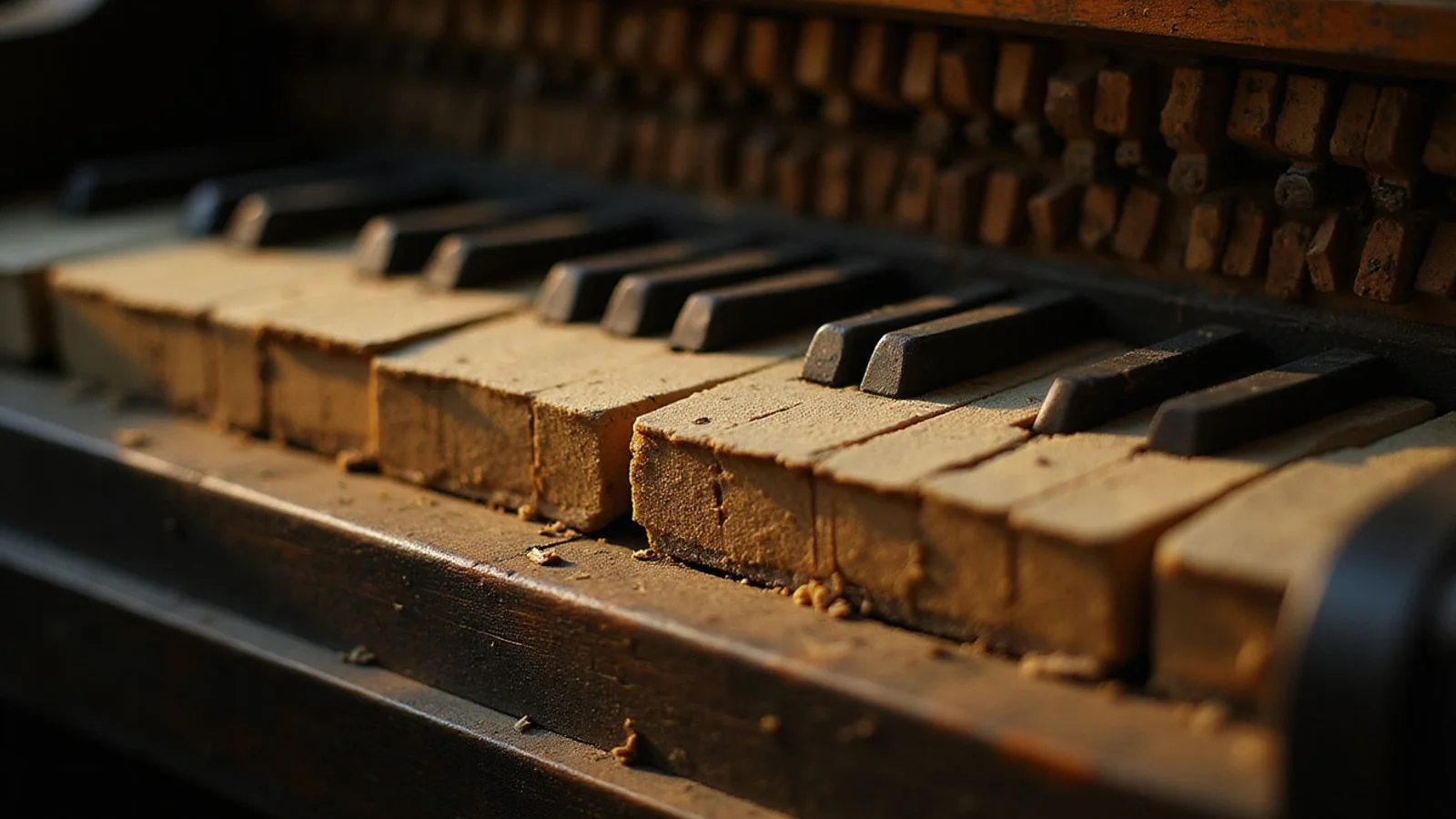
Older pianos have character. They also have history, which means accumulated wear in fairly predictable places. Here’s a plain-English tour of the problems we see most often in the workshop — which are routine, which are expensive, and which mean the piano isn’t worth saving. Everything on our pre-owned pianos floor has already been filtered through the checklist below.
Worn hammer felt
What it is: The felt hammer faces develop grooves from hitting the strings. Eventually, instead of a soft mushroom-shaped tip, you get a grooved, compressed, hardened hammer that can’t produce warm tone.
How serious: Very common. Routine.
Fix: Needling and re-shaping on mildly worn hammers. Full hammer replacement on badly worn ones. Replacement runs £400-£1,200 for a set of 88, fitted and voiced.
When it’s a dealbreaker: Rarely. Almost always worth fixing on a piano that’s otherwise sound.
Loose tuning pins (pinblock issues)
What it is: The tuning pins sit in a hardwood block. Over 60+ years, the block can lose its grip on the pins, meaning the piano won’t hold tuning.
How serious: The biggest single red flag on older pianos.
Fix: Mild looseness can sometimes be managed with over-sized replacement pins. A genuinely failed pinblock needs replacement — a 60+ hour job that effectively rebuilds the piano.
When it’s a dealbreaker: Frequently. Pinblock replacement on a non-premium piano usually costs more than the piano is worth afterwards. We turn down pianos with failed pinblocks unless the instrument is genuinely exceptional.
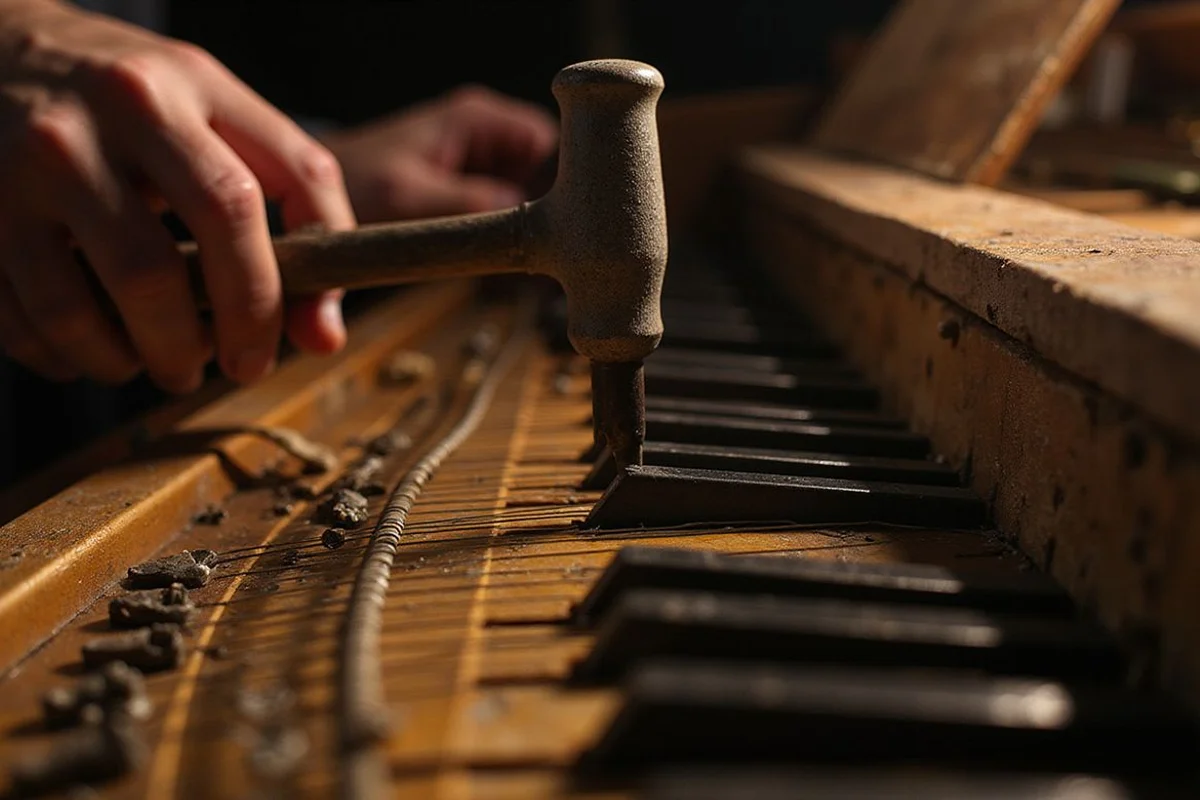
Cracked soundboard
What it is: The soundboard is the large wooden panel that amplifies the string vibration. Dry conditions over decades cause it to crack along the grain.
How serious: Depends entirely on where and how bad.
Fix: Small hairline cracks can be shimmed (a strip of wood glued into the crack). This is normal workshop work. Larger cracks, multiple cracks, or cracks at the bridges are much more serious.
When it’s a dealbreaker: A soundboard cracked at the bridge, or several wide cracks, usually ends the piano’s useful life. Otherwise, single shimmed cracks have minimal effect on sound.
Sticking keys
What it is: A key that doesn’t spring back fully after being pressed. Almost always caused by swollen or worn action parts (bushings) restricting key travel.
How serious: Common. Almost always fixable.
Fix: Bushing replacement and action regulation. A few sticking keys are 1-3 hours of workshop time. Widespread sticking suggests broader action wear.
When it’s a dealbreaker: Not on its own. Sticking keys combined with other issues might tip a judgement.
Broken or deteriorated strings
What it is: Strings can break (not usually — they’re under tension but designed for it), rust (surface or deep), or lose their acoustic life.
How serious: Routine.
Fix: Individual string replacement is straightforward. Full re-stringing is a bigger job (£800-£1,500 for 88+ strings including labour).
When it’s a dealbreaker: Never on its own.
Worn damper felt
What it is: The felt that stops strings from sustaining once a key is released. Compressed or worn damper felt causes notes to “ring on” after release.
How serious: Routine.
Fix: Re-felting or replacement of dampers. A few hours of workshop time.
When it’s a dealbreaker: Never on its own.
Case finish damage
What it is: Scratches, water marks, lifted veneer, or yellowed polyester.
How serious: Cosmetic only. Doesn’t affect how the piano plays or sounds.
Fix: French polish touch-ups for mild damage; full re-finish for serious work. A full re-polish runs £600-£1,500.
When it’s a dealbreaker: Only if the buyer specifically wants a pristine cabinet.
What Keys & Co. rejects outright
We don’t take on every piano that’s offered to us. Pianos we turn down include:
- Failed pinblocks with multiple loose pins.
- Major soundboard damage or splitting at the bridges.
- Frame cracks (the cast iron harp).
- Pianos stored in conservatories or damp sheds — often the damage is irreversible.
- Pianos moved repeatedly without professional care — structural wear to the case and action points.
Turning pianos down is important for us. It’s much kinder in the long run to say “no” at intake than to push problem instruments onto customers. See what to look for in a second-hand piano for the inspection framework we use before accepting any pre-owned piano into the workshop.
The short version
Most older-piano problems are routine workshop work that a good technician can fix for a few hundred pounds. The expensive exceptions — pinblock failures and major soundboard damage — are the two things you absolutely must check for before committing to a private-sale piano. Or skip the whole worry and buy from a showroom where the checks are already done.