How to Check Your Piano's Age from the Serial Number
Where to find the serial number on an upright or a grand, brand-by-brand lookup, and what the age tells you about condition and value.
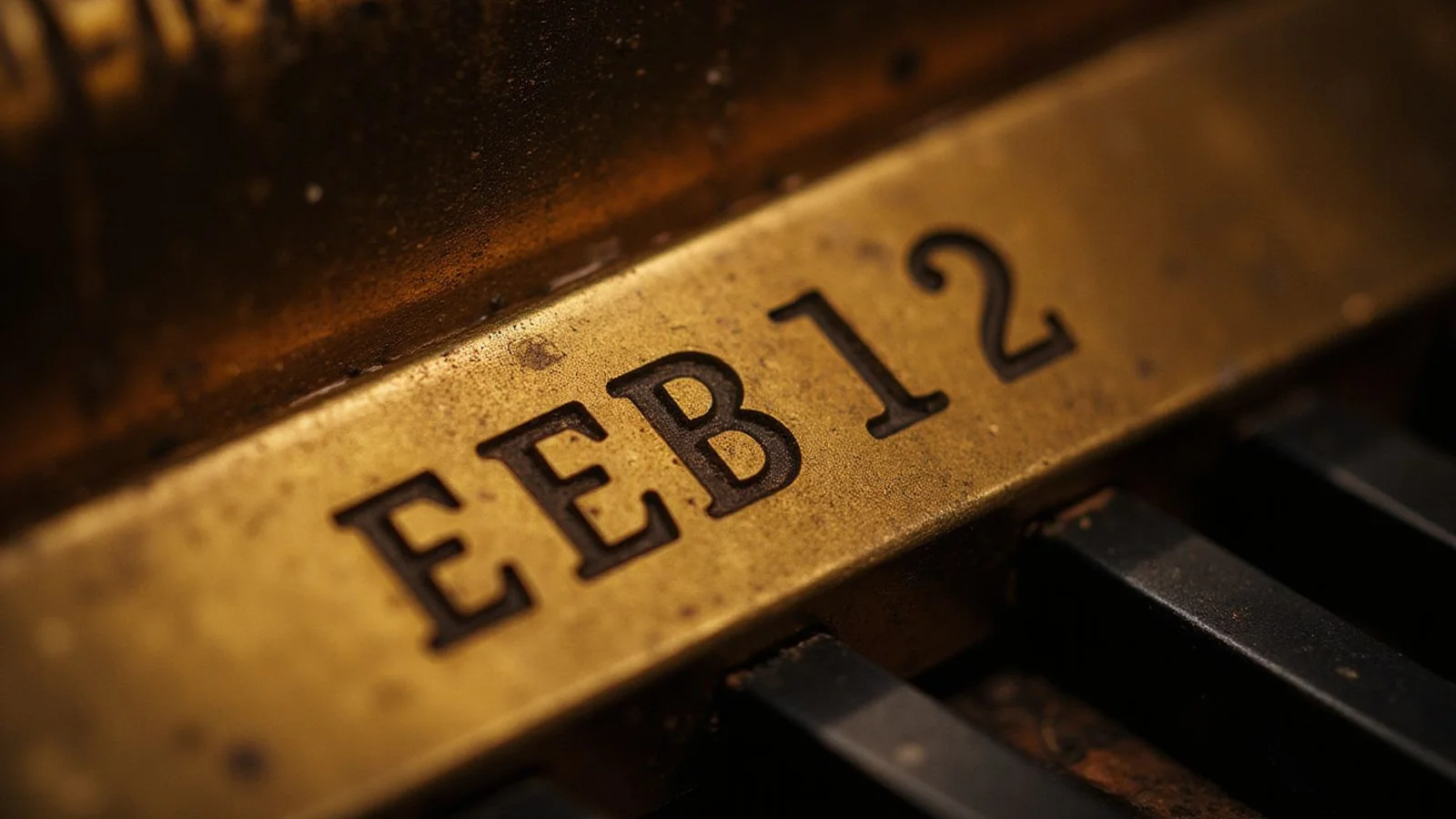
Every piano has a serial number hiding somewhere inside the case. We know finding this number is the first step to discovering your instrument’s history and true condition. It is also the first number we record for every instrument that joins our pre-owned range.
Checking the piano serial number age tells you the exact year it was made and often the factory it came from.
Combined with the make and model, this detail reveals a surprising amount about the likely wear on the hammers and strings. Our team often relies on this single piece of information to guide restoration decisions for homeowners and venues across the UK. Here is where you can locate the serial number on most pianos, and what that age actually tells you.
Where to find the serial number
Upright pianos
Most upright pianos hide the serial number in a few common places. Our technicians suggest starting your search at the top and working your way down.
If you are wondering, “how old is my piano?”, finding the code is usually a simple process.
- Top lid opened. Open the top lid of the piano and look inside at the iron frame. The serial number is usually stamped directly onto the gold-coloured metal harp, often near the tuning pins at the top right or middle.
- Above the keyboard. Remove the fall board, which is the wooden flap that covers the keys when closed. The number may be printed or stamped on the wood frame above the keys.
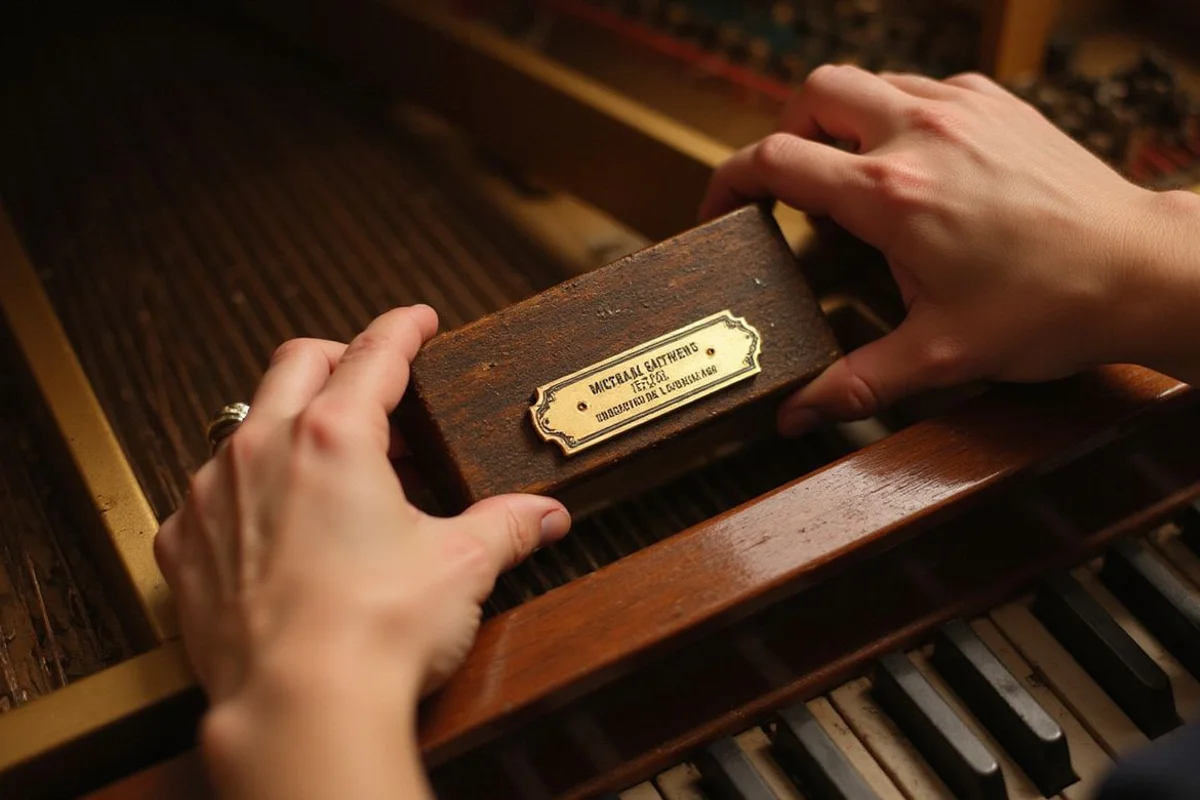
- Behind the piano. Some older pianos carry the number on a small plaque attached to the rear of the case.
- Inside the action. Very rarely, the number sits inside the mechanism. You would need a professional to safely access this spot without snapping the delicate hammer shanks.
Grand pianos
On a baby grand or full grand piano, the placement differs slightly. We always check the primary frame areas first before looking elsewhere.
These spots are usually highly visible once the instrument is open.
- Under the music desk. Lift the lid and look at the cast iron plate near the tuning pins. The digits typically sit underneath where the music stand rests.
- On the soundboard. Some brands stamp the code directly onto the wooden soundboard near the bass bridge.
- Under the keyslip. A hidden number might be stamped on the back of the long wooden ledge running along the front of the keys.
Brand-specific lookup notes
Different manufacturers follow entirely different numbering systems. Our experience shows that knowing the brand quirks can save you hours of frustrating research.
This knowledge is especially useful for tracing British production runs. Here are the specific details for the most popular names.
Yamaha
Yamaha serial numbers are typically 7 digits long. We often see homeowners confused by specific UK models.
Their full lookup table is published online and covers every year since production began. A number starting with 6 million is from the 2010s, while the 5 million range typically indicates the 2000s.
Our database notes a crucial detail for UK buyers regarding the Milton Keynes factory. Pianos built there between 1990 and 2009 under the Kemble licence usually feature an “N” suffix and an “E” prefix in the serial code.
Kawai
Kawai serials are generally 6 or 7 digits. We find their online lookup tables to be incredibly reliable.
The company has maintained very consistent numbering over the decades.
Steinway & Sons
Steinway serial numbers run in strict chronological order from the 1850s. Our valuation team loves this brand because a known serial provides an exact, undeniable year.
There is no guesswork involved with their historic records.
Bechstein
Bechstein numbers can be cross-referenced via the maker’s published tables. We do encounter challenges with certain eras of this brand.
Some pre-war numbers are much harder to pin down exactly due to lost records.
Kemble
Kemble built outstanding uprights in London from 1911 before moving to Milton Keynes in 1968. Our specialists regularly service these sturdy British instruments.
The factory remained active until they shut down UK production in 2009. While exact numbers are harder to cross-reference directly, the approximate decade is usually derivable from the case style and action design.
Broadwood and other vintage British
Older British makers like Broadwood, Collard & Collard, and Allison often have less complete public records. We always recommend consulting local archives for the most accurate data.
Broadwood is a unique exception for UK owners. The Surrey History Centre holds the original Broadwood archives, which are available for public reference.
Our researchers use these archives to discover the exact day the piano was finished, the first purchaser, and even the original method of transportation. A technician can also narrow the date to a 10-year band from construction details alone.
What age tells you about condition
Looking up your piano serial number age gives you a precise manufacture year. We use this date to predict the likely mechanical state of the instrument.
Age alone provides a remarkably accurate roadmap of what parts might need replacing soon.
| Piano Age | Condition Stage | Expected Maintenance |
|---|---|---|
| 0 to 15 Years | Modern | Should play well with routine tuning. Original parts remain in service. |
| 15 to 40 Years | Middle Age | Action regulation and hammer shaping will be required at some point. |
| 40 to 80 Years | Mature | Hammer replacement is likely. Action regulation is well overdue. |
| 80+ Years | Restoration Candidate | Substantial workshop work is needed unless fully restored recently. |
Our workshop data confirms that hammer lifetime in a privately-owned piano is typically 30 to 50 years. String life generally ranges from 60 to 80 years before tonal quality drops sharply.
Pianos that remain genuinely pristine at 60 years old have usually enjoyed previous workshop attention. They might also have lived in incredibly stable, climate-controlled rooms.
Why the age matters for valuation
If you are considering trading in or selling your piano, the serial number acts as the baseline for pricing. We combine this date with the brand and model to establish a fair market position.
A quick piano age check removes the guesswork from private sales.
“An accurate serial number shifts the conversation significantly, protecting your investment and ensuring a fair valuation.”
Our piano trade-in estimator walks through the valuation logic with brand tier, type, age, and condition inputs. Buyers should always verify the details.
If you are buying pre-owned and a seller gives a vague estimate, ask for the exact serial number. Guesses often mean the seller simply does not know, and the true age could be very different in either direction.
What if there’s no serial number?
Some pre-war pianos never had a serial number stamped on them. We occasionally see instruments where the plates were removed, fell off, or became completely illegible.
Do not panic if your piano lacks a findable number. There are alternative ways to estimate the era.
- Check the keyslip: Remove the long wooden ledge under the front keys to see if the number is stamped on the hidden action frame.
- Take clear photos: Capture images of the case, the felt hammer row inside the action, and the soundboard from the back.
- Find brand markings: Photograph any remaining logos or faded decals.
- Contact an expert: Send the images to us at hello@keysandco.co.uk.
Our team can usually estimate the decade from specific build details like the action design, case style, hammer type, and string layout. This method is less precise than an exact piano serial number lookup.
However, it is often precise enough for business valuations or age-related care decisions.
What to do next
If you found the sequence and are curious about the exact piano serial number age, look up the brand’s published serial table online. We strongly encourage gathering all the facts before making any major servicing decisions.
Understanding your instrument’s history is incredibly rewarding. If you want a professional valuation based on what you have discovered, simply reach out.
Our team is ready to review your photos and the number via our contact page. For an instant rough estimate on your current instrument, try our piano trade-in estimator.
The journey to restoring or selling your piano starts with that single set of numbers.