Pre-Owned vs New Piano
Warranty, tone, touch, and real-world value compared. When pre-owned wins, when new wins, and the trade-in implications of each choice.
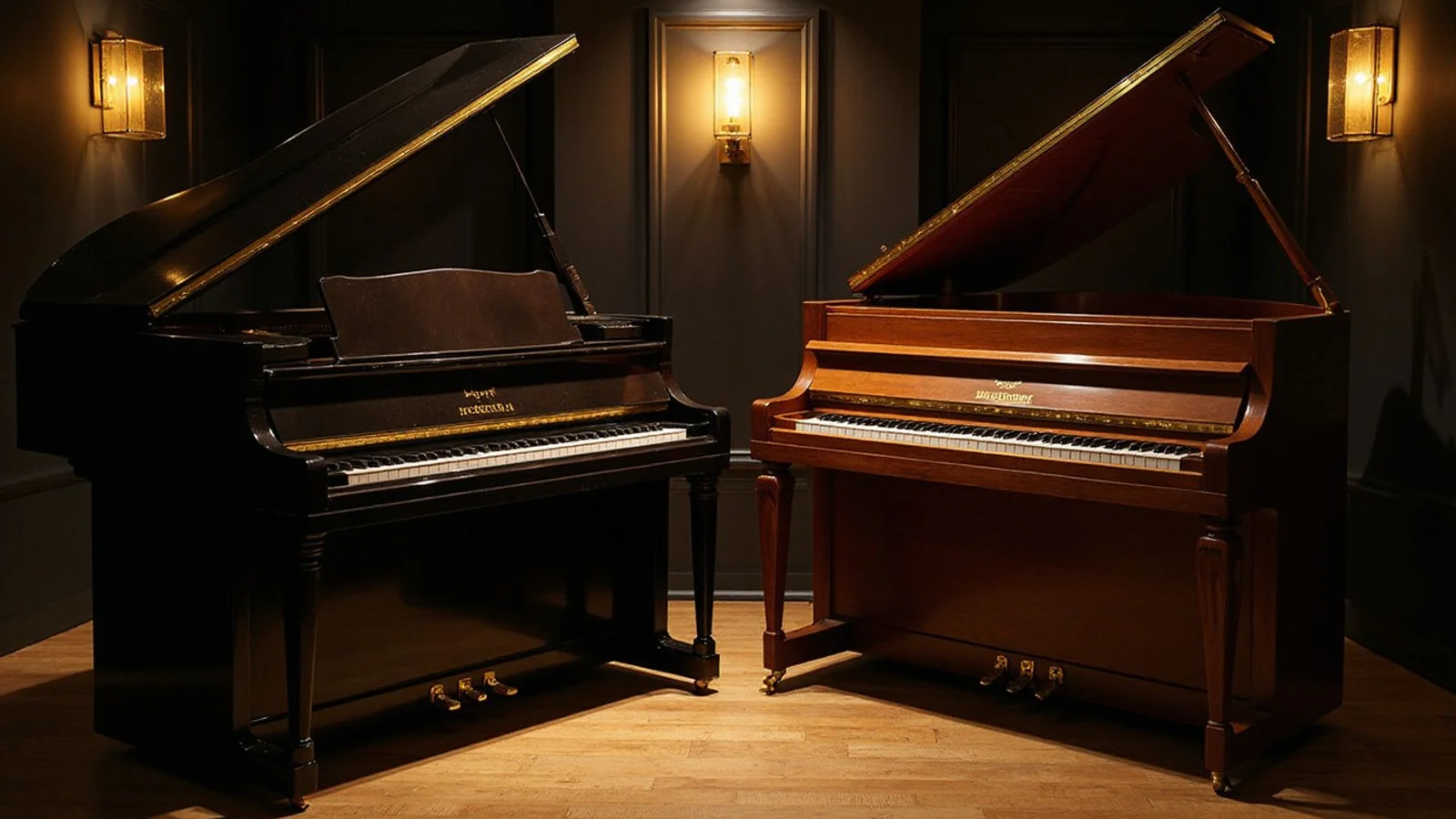
We know that the single biggest piano-buying decision is rarely about picking Yamaha over Kawai. The real challenge is weighing a pre owned vs new piano for your space. A side-by-side visit with our pre-owned pianos and the new stock often settles the question in twenty minutes.
Buyers often assume that a factory-fresh instrument is the only reliable choice.
Our professional service team has helped countless homeowners and business owners make this exact choice. At the exact same price point, new and used pianos offer completely different musical strengths. Let’s break down the honest trade-offs so you can find the perfect value for your budget.
At each price tier
We monitor the UK piano market daily to understand exactly what your money buys. Choosing between a second hand or new piano requires looking closely at both markets. Finding the right fit means setting a strict budget before visiting the showroom.
Our current 2026 data shows clear winners at different investment levels.
Here is the realistic breakdown of what you can expect at every stage. The pre owned vs new piano comparison shifts dramatically as you increase your budget.
£2,000 - £3,500
We always advise beginners that true acoustic quality requires a reasonable starting budget. New: A brand-new acoustic piano from a reputable builder is not quite possible here. The cheapest honest new upright, like the compact Yamaha B1, now starts around £3,000 to £3,500.
Our technicians frequently recommend the second-hand market for this exact price bracket. Pre-owned: A quality refurbished upright like a restored British-built Knight K10 or a classic Kemble offers incredible value. These vintage models provide famously rich bass responses in small cabinets.
Verdict: Pre-owned wins easily at this tier. The value of a properly restored vintage instrument cannot be beaten here.
£3,500 - £5,500
Our showroom frequently features fantastic options from both categories in this range. New: You can secure a Yamaha B1 or a Yamaha B2 for £4,500 to £5,500. The Kawai K-200 also enters the picture around £4,350 to £4,950, offering a superb Millennium III action with ABS-carbon parts.
We consider these to be exceptionally solid entry-level uprights for dedicated learners. Pre-owned: A fully restored vintage upright, often 120cm or taller, is widely available. You will get considerably more piano per pound, including early 1980s Yamaha U1 models.
Verdict: Pre-owned often wins on raw playing experience and sound projection. New instruments win on maximum longevity and the security of a factory warranty.
£5,500 - £8,000
We see many serious amateurs find their forever piano in this exact price band. New: This budget opens up fantastic mid-range uprights like the Yamaha B3 or the Kawai K-300. These models provide a taller cabinet and a noticeably richer, fuller tone.
Our restoration team often sources premium pre-loved options to compete with these new models. Pre-owned: You can purchase a premium second-hand upright like a Yamaha U1 or Kawai K-300 that is only 5 to 15 years old. These lightly used instruments are typically in excellent, near-mint condition.
Verdict: A pre-loved Yamaha U1 at this price is often the absolute sweet spot for dedicated players. You get a professional-grade instrument without the premium retail markup.
£8,000 - £12,000
Our customers shopping at this level expect nothing short of excellence. New: You step firmly into premium upright territory with a brand-new Yamaha U1, which retails near £8,800, or a Kawai K-500. These are the backbone of music conservatoires across the UK.
We also stock incredible second-hand options that rival these new uprights. Pre-owned: A premium pre-loved Yamaha U3 or Kawai K-800 from the last decade fits comfortably here. You could even acquire a small, fully restored grand piano, like a Yamaha GB1K.
Verdict: This tier comes down entirely to personal preference. Both new and used paths provide magnificent, lifelong instruments.
£12,000+
We consider this budget the official entry point into serious baby grand territory. New: You can purchase a beautiful, factory-fresh baby grand with modern design refinements. The peace of mind that comes with a pristine soundboard is highly appealing.
Our premium selection also includes larger, fully restored grand pianos. Pre-owned: You can invest in a beautifully maintained concert-style grand that offers immense power. The longer strings on a larger used grand provide a warmth that smaller new pianos cannot match.
Verdict: Newness matters more at this tier because you are likely keeping the instrument for decades. A new action guarantees absolute predictability for highly demanding repertoire.
The warranty question
Our policy on warranties is designed to give you complete transparency before you buy. New: You receive a 5-year warranty covering manufacturer defects and our workshop preparation. You can read the full detail in our new piano warranty explained guide.
We provide a different but equally reliable safety net for second-hand models. Pre-owned: You get a 12-month warranty on the workshop work we have carried out. It is not the same length, but it covers the mechanical issues most likely to go wrong, like sticky keys.
Our experience shows that a 5-year warranty is worth £500 to £1,000 in peace of mind for many buyers. If that financial framing matters to you, the new market wins. If you are comfortable relying on the pristine condition of a fully inspected used piano, pre-owned wins on pure playing value.
Touch and tone
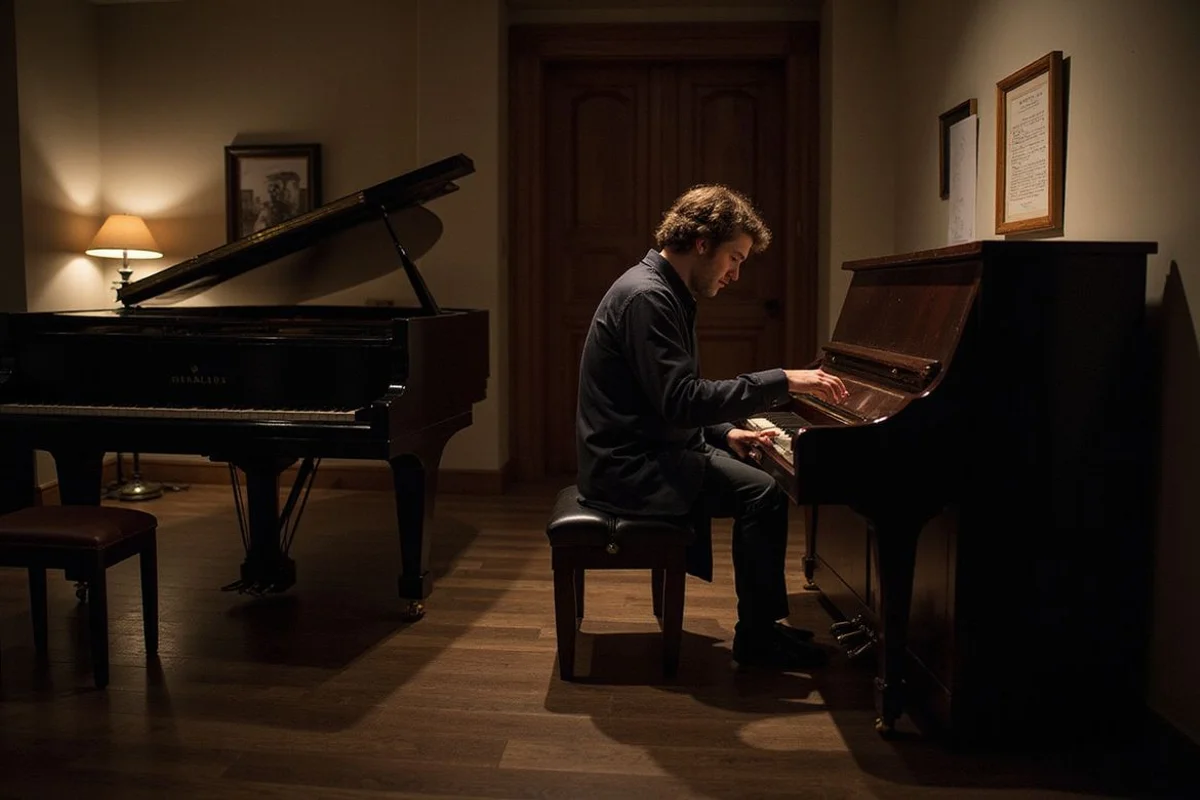
We frequently hear concerns that older pianos will automatically feel sluggish or heavy. Touch: A well-regulated pre-owned piano feels just as responsive as a well-regulated new one. Regulation, meaning the precise adjustment of the internal action, is a far bigger factor than age.
Our technicians spend hours ensuring every key responds perfectly before it hits the floor. Tone: A new piano features fresh hammers, pristine strings, and a fully resonant soundboard straight from the factory. A pre-owned piano that has been properly restored can easily match that vibrant sound.
We must warn you that a used piano lacking proper restoration will feel dull and muted by comparison. The honest answer is that preparation quality matters more than the basic used vs new piano debate. A badly prepared new piano plays worse than a beautifully prepared pre-owned one.
Trade-in implications
Our customers often ask about the long-term financial reality of their purchase. New pianos hold their trade-in value quite well for modern quality brands in the UK. You will lose roughly 30 to 40% on a new Yamaha or Kawai in the first 5 years, but then the price stabilises.
We see a completely different depreciation curve on the second-hand market. Pre-owned pianos hold their value remarkably well because you have bought at a post-depreciation price. You will usually lose far less, perhaps only 10 to 20%, when you eventually trade it in.
Our data shows that highly demanded models like the Yamaha U1 barely drop in value at all. If you know you will upgrade in 5 to 10 years, pre-owned is often the better financial move. This preserves your capital for that future baby grand.
| Piano Condition | Initial Depreciation (First 5 Years) | Long-Term Value Retention |
|---|---|---|
| New Pianos | 30% to 40% Drop | Stabilises after 5 years |
| Pre-Owned Pianos | 10% to 20% Drop | Extremely high (post-depreciation) |
When new clearly wins
We recommend purchasing a brand-new instrument when specific modern features are non-negotiable. There are several scenarios where a factory-fresh model is simply the smartest path. Consider a new purchase if any of these factors apply to your situation.
- A silent system is critical. You want a factory-fitted system like the Yamaha SC3 Silent Piano or the advanced TC3 TransAcoustic.
- You want a specific new model. You have played a brand-new Kawai K-200 elsewhere and want exactly that touch.
- The 5-year warranty is meaningful. This long-term coverage directly aligns with your personal risk tolerance.
- Heavy institutional use is expected. Schools and venues often need the absolute predictability that new pianos provide.
When pre-owned clearly wins
Our showroom team points buyers to the used market when pure value is the top priority. There are countless situations where a restored instrument is clearly the superior choice. A second-hand piano is likely your best option if you relate to these points.
- Budget is the binding constraint. You want maximum instrument per pound, prioritizing sound over shiny new keys.
- Quality vintage character appeals. A restored British Kemble, a Knight K10, or an old Yamaha U1 feels different to anything modern.
- You are a serious classical player. You desperately want a premium tier action on a non-premium budget.
- You represent a school, church, or institution. A high-quality restored piano often beats a new budget model on sheer musical value.
The decision in practice
We frequently hear the question: should i buy a new piano? The staff will set up two candidates in our private viewing room, one new and one pre-owned, both at your budget. Play each instrument for twenty minutes without any distractions.
Our promise is that we will not push you either way. The right piano is whichever one you keep going back to during your test.
For the broader second-hand investment view, read are pre-owned pianos a good investment. Weighing a pre owned vs new piano takes time, so book your visit today and let your hands decide.