Restored vs Refurbished Piano
Restored means a full workshop rebuild; refurbished means cosmetic and light regulation. What the terms mean and how to read seller claims sceptically.
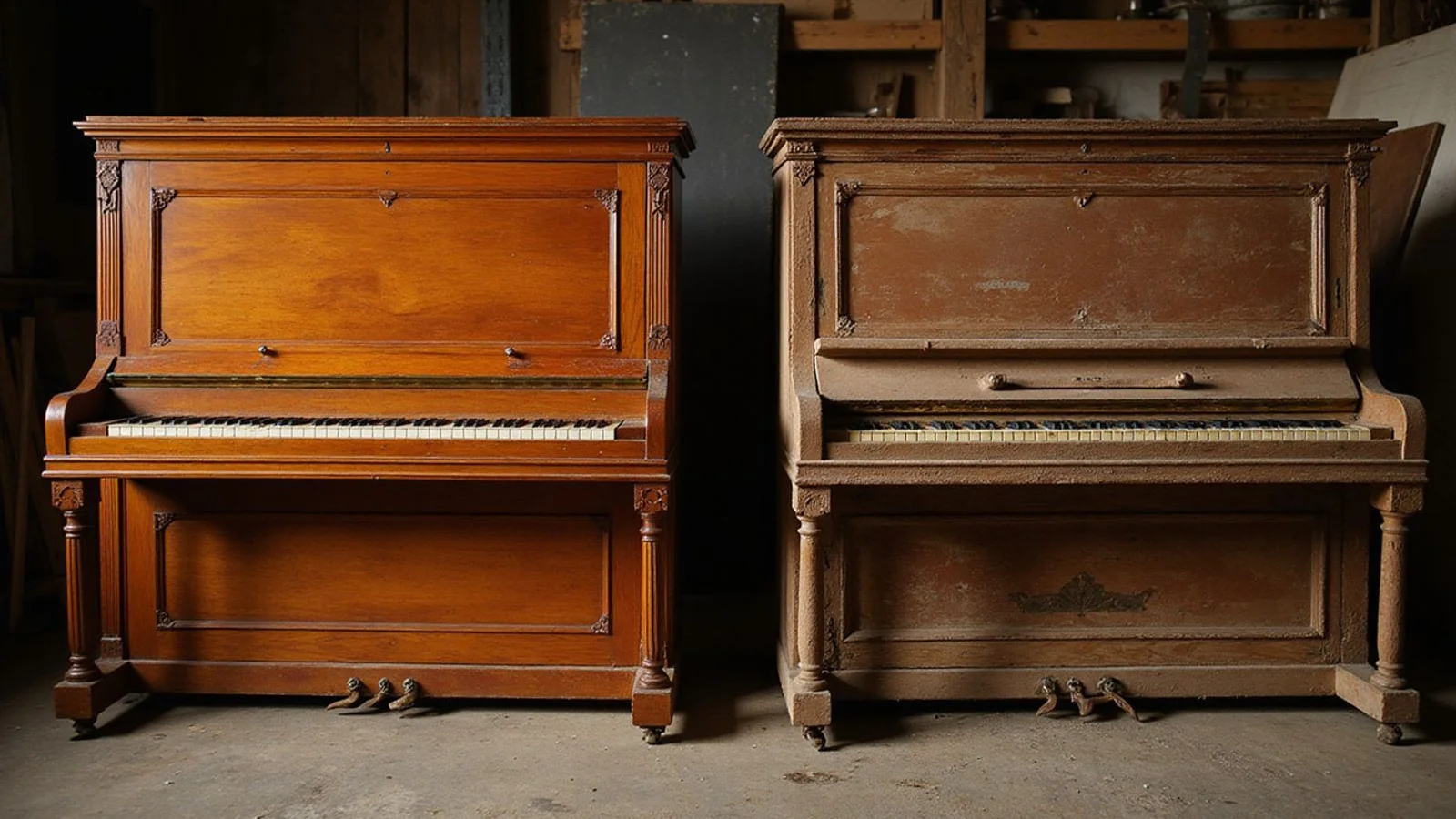
The words “restored” and “refurbished” are frequently used interchangeably across the piano market. Each instrument among our restored pianos carries a workshop record that makes the distinction unambiguous.
We often see buyers struggling to compare instruments because of this confusing terminology. This creates a genuine problem when you are trying to make an informed investment for your home or business.
Our team will break down exactly what these terms mean and how you can evaluate seller claims with confidence. Understanding the difference between a restored vs refurbished piano is essential before spending a single pound.
Restored, a full workshop rebuild
A genuinely restored piano is a completely rebuilt instrument that has been taken apart, assessed, and upgraded with significant new parts. We replace all major wearing parts as standard during this intensive workshop process. This level of comprehensive work resets the clock, giving the instrument another 50 to 70 years of musical life.
Our minimum restoration standard requires specific, high-value component upgrades:
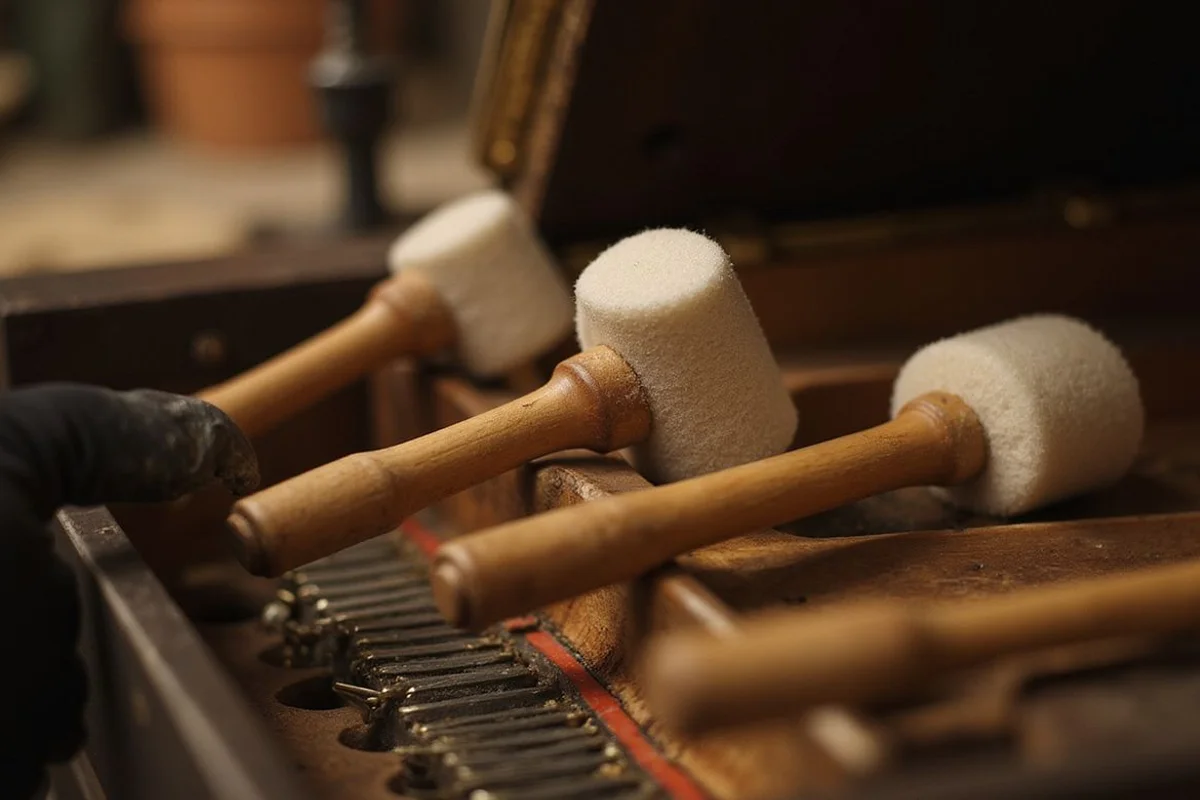
- New hammers and felt. Worn components produce a dull tone, so technicians install premium German-made Abel or Renner hammers to transform the sound.
- New strings and tuning pins. Metal fatigue sets in over decades, making fresh Röslau steel strings vital for a bright, resonant tone.
- New or re-felted dampers. Fresh felts ensure notes cut off cleanly the moment you release a key.
- Full action regulation. This covers essential measurements like key dip, let-off, hammer alignment, and damper timing.
- Custom voicing. Adjusting the new hammer felts produces an even, beautiful tone across the entire keyboard.
- Case refinishing. A full cabinet polish or traditional re-veneering makes the exterior match the exceptional internal quality.
A proper restoration demands 40 to 80 workshop hours to execute correctly. We know this massive investment of labour shows clearly in the finished instrument.
Refurbished, lighter cosmetic and regulating work
A refurbished piano has been cleaned, lightly regulated, and tuned to concert pitch, but it still relies on its original major components. We define this as a much lighter tier of maintenance suitable for lightly used instruments. Major wearing parts remain original, meaning the fundamental tone profile stays unchanged.
Our workshop finds this is a perfectly valid tier of work for well-maintained pianos. A typical refurbishment covers these specific areas:
- Original hammers. Technicians might re-shape or needle the existing felt, but they do not install new parts.
- Original strings. These are carefully retensioned and tuned to the standard A440 concert pitch.
- Original dampers. Mechanics adjust the existing components for basic functionality.
- Light action regulation. The focus sits on minor playing adjustments rather than a comprehensive rebuild.
- Cosmetic cabinet work. Minor cabinet scratches receive quick French polish touch-ups and surface cleaning.
A standard refurbishment takes anywhere from 4 to 12 hours of workshop time. We always remind buyers that this lighter work should never cost the same as a comprehensive restoration. Modern UK central heating often causes minor dryness, making a quick refurbishment perfect for addressing those small environmental issues.
How to read a seller listing sceptically
You should always question vague terminology in piano listings by asking for specific, documented details about the work performed. We strongly advise demanding clear answers before making any financial commitment. Your best defence is understanding the refurbished piano meaning and looking for concrete facts.
Our technicians recommend asking sellers these precise questions:
- What specific parts were replaced? Ask directly if the strings, dampers, or hammer shanks are brand new.
- How many hours were spent? Genuine restoration takes a minimum of 40 hours, compared to the brief time spent on refurbishments.
- What elements were left untouched? Honest professionals clearly state exactly what parts did not need fixing.
- Who completed the work? Look for named technicians registered with the UK Piano Tuners’ Association (PTA) rather than a generic workshop team.
Finding a clear piano restoration definition helps protect your budget from misleading marketing tactics. We suggest walking away if a dealer cannot provide a detailed condition report. Professional technicians will always provide transparent paperwork detailing their exact labour.
What professionally prepared means at Keys and Co
Every piano is professionally prepared by James in our Harrogate workshop to meet strict minimum quality standards. We ensure this baseline preparation always includes a full intake inspection, action regulation, voicing, and a final concert-pitch tuning. This thorough process guarantees every single instrument plays beautifully before it reaches the showroom floor.
Our specific terminology breaks down exactly like this:
- Restored. Major components like hammers, strings, and dampers get replaced, and the exterior case is fully refinished.
- Refurbished. Original hammers and strings are retained because the piano only required lighter cosmetic maintenance.
- Pre-loved. Quality used models like the Yamaha U1 or Kawai K300 arrive in great condition and receive thorough workshop preparation without a full rebuild.
Detailed workshop notes exist for every single piano currently available on the floor. We are happy to share the exact service history for any instrument that catches your eye.
Price implications
The price of a used piano directly reflects the amount of skilled workshop labour invested in its mechanical preparation. We categorise pricing into three clear, transparent tiers to help buyers budget effectively. Your financial commitment will clearly dictate the level of mechanical overhaul you receive.
Our rough pricing tiers reflect the current required labour:
- Restored vintage upright. Expect to pay between £2,500 and £5,000 for a fully rebuilt instrument.
- Refurbished upright. These lighter-touch pianos sit comfortably between £1,200 and £2,500.
- Pre-loved Yamaha or Kawai upright. Prices range from £2,000 to £5,000 depending on the specific manufacturing year and model.
A fully restored vintage instrument represents exceptional value compared to the £9,500 plus cost of a brand new equivalent model. We find the restored tier offers incredible value for buyers seeking quality British-made instruments. Heritage pianos from makers like Kemble, Knight, or Steinbach still have decades of life left in them when properly rebuilt.
Conclusion
Detailed documentation provides complete transparency for any prospective buyer. We invite you to read exactly how we restore pianos in our workshop to understand the true value of a rebuilt instrument. This behind-the-scenes look reveals the exact techniques used on every showroom model.
Our team is always ready to answer any technical questions you might have about securing a top-quality restored piano uk residents can completely trust. Contact us today to book a showroom visit and hear the difference yourself.