Silent Piano Systems Explained
What Yamaha SILENT and Kawai AURES do, how they work, and which new piano models can be ordered with them at Keys & Co.
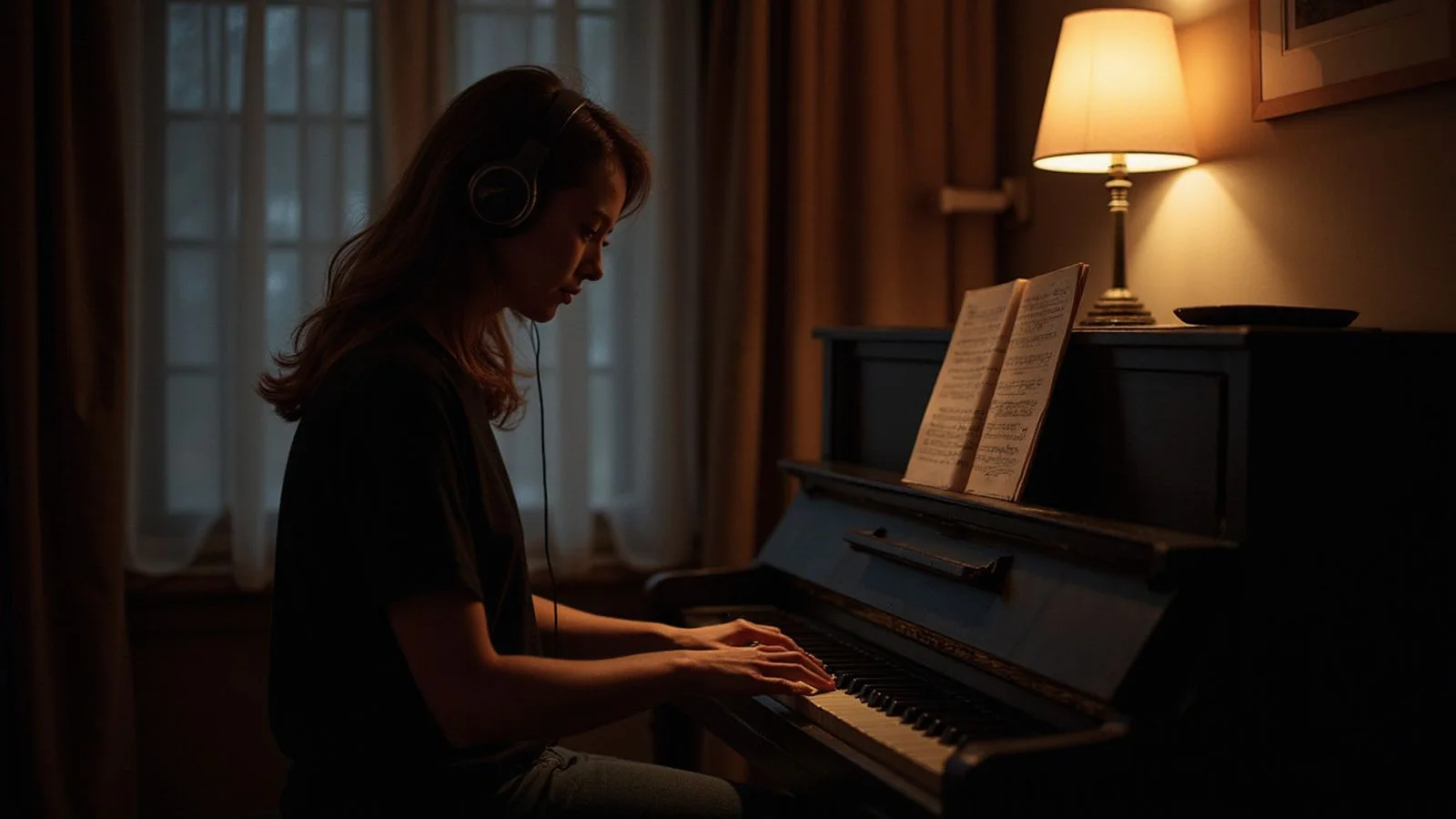
We often hear from clients who struggle to schedule piano practice around busy households. Most of the silent-capable instruments sit within our new piano collection, ready to demonstrate on request.
The noise levels of a traditional acoustic instrument can quickly become a problem in modern terraced housing. A silent piano system explained simply is an acoustic piano fitted with a digital mute function.
Our team recommends these hybrid models as the most practical solution for dedicated musicians. Let us look at the data to see what modern playing habits tell us. The exact technical mechanics are fascinating once you break them down.
What “silent” means technically
When you engage the silent mode, a mechanical rail physically blocks the hammers from striking the strings. Optical sensors capture your key movements to trigger a digital sound.
Our technicians find the engineering behind this dual functionality fascinating. Having the inner workings of a silent piano system explained helps you appreciate the engineering behind the illusion. The system relies on three core components to function properly:
- A mute rail slides into position just 2 to 3 millimetres before the strings. The hammers still travel their full distance, so the action feels exactly the same, but the strings never sound.
- Optical sensors sit underneath each key. Modern systems use non-contact 2-point optical fibre detection to track the exact speed and depth of your stroke.
- A digital sound module interprets that data instantly. It produces a sampled piano sound in real time, routed directly through a headphone jack.
We always demonstrate to customers how flipping the rail off instantly returns the instrument to a normal acoustic state. The two modes do not interfere with each other at all. Acoustic performance remains completely uncompromised.

Yamaha SILENT vs Kawai AURES
Both major manufacturers offer silent systems as factory-fitted options. They use completely different technologies to deliver the sound. Our team has spent hours comparing these two approaches side-by-side in the showroom. Yamaha relies on traditional headphone routing for its acoustic models. Kawai can turn the entire solid spruce soundboard into a vibrating speaker. Let us compare the core specifications directly.
| Feature | Yamaha SH3 | Kawai AURES AR2 |
|---|---|---|
| Primary Concert Sample | CFX & Bösendorfer Imperial | Shigeru Kawai SK-EX |
| Sound Delivery | Headphones primarily | Headphones & Soundboard Transducers |
| Sensor Technology | Articulation Sensor System | Integrated Hammer Sensing System |
Yamaha SILENT (SC2, SH3)
Yamaha equips its current SH3 silent system with the premium CFX concert grand and Bösendorfer Imperial samples. This provides the exact same tonal palette found in their flagship digital pianos.
Our staff loves showing how precise the touch response is across the entire dynamic range. The Virtual Resonance Modelling (VRM) included in the SH3 digitally recreates the sympathetic resonance of the entire piano cabinet. SC2 is the older, simpler version found on some entry-level models. The SH3 is the upgrade worth asking for on new 2026 pianos.
Kawai AURES / ATX
Kawai takes a completely different engineering route with the AURES AR2 system. This setup uses four high-performance transducers mounted directly onto the soundboard.
Our showroom visitors are often surprised by the realism of this technology. The transducers vibrate the wood, providing a three-dimensional sound through headphones or the piano itself at low volume. Kawai’s Spatial Headphone Sound (SHS) feature adjusts the acoustic positioning of the sound to reduce ear fatigue. The ATX4 system is Kawai’s traditional headphone-only approach for those who do not need the soundboard speaker.
What you can plug in
A modern silent piano provides multiple connection points, including headphone jacks, line outputs, and MIDI ports. This connectivity transforms a traditional acoustic piano into a powerful MIDI controller.
We find the modern integration of Bluetooth to be the biggest game changer for daily practice. Most 2026 models include Bluetooth 5.1 BLE MIDI as standard. A typical setup offers the following inputs and outputs:
- Headphone jack (1/4″ or 1/8″) for primary silent practice.
- Line out to run audio to a small speaker or an interface for recording.
- Line in to play along to a backing track directly through the system.
- MIDI out (USB) for connection to notation software or DAWs.
- Bluetooth MIDI / audio to connect smartphones wirelessly.
Our staff frequently show parents how easily these pianos pair with modern learning software. This wireless capability makes the silent piano quietly excellent for practice apps like Flowkey, Simply Piano, Skoove, and Piano Marvel. You get the real acoustic touch combined with the instant feedback of digital lessons.
Who benefits most
Silent systems provide the fastest return on investment for people living in shared buildings. They are the ultimate problem solver for musicians battling noise restrictions.
We regularly review UK housing data to understand our customers’ changing needs. The latest 2026 briefing from the Chartered Institute of Environmental Health (CIEH) recorded over 306,000 noise complaints in England and Wales. That equates to around 840 complaints every single day.
Our customers use silent pianos to avoid becoming part of those statistics. These systems pay for themselves quickest in specific living situations:
- Terraced houses and flats where shared walls limit evening practice and trigger noise disputes.
- Families with young children where bedtime and practice time never align.
- Adult learners who want to practise after work without disturbing the rest of the house.
- Night-owl practisers doing their most creative work after 10 pm.
We always advise clients to consider their living arrangements carefully before buying. Standard acoustic models are perfectly fine if none of these scenarios apply. The added technology adds a premium of £1,500 to £2,500 above the standard price. This is a significant investment, so it is perfectly acceptable to skip it if volume is not a concern.
Which models can be ordered with silent at Keys & Co.
Most new Yamaha B-series and U-series uprights can be factory-specified with the SILENT system at Keys & Co. Grand pianos in the Yamaha GB and C series also support this technology.
We keep several hybrid models on the showroom floor for side-by-side comparison. Popular Kawai models like the K-300 uprights and GL-series grands can be ordered with AURES2 or ATX4 setups. The timing catch is that factory silent systems need to be ordered directly with the piano.
Our inventory rotates quickly, but these integrated systems are never retrofitted to existing showroom stock. Expect a lead time of 4 to 8 weeks from order to delivery if you want the silent feature on a specific build. You can always try a demonstrator unit in the shop before committing to a custom factory order.
Retrofitting
Retrofit silent systems are third-party digital kits added to an existing acoustic piano. They offer an excellent lifeline for older, beloved pianos.
We do not recommend them for brand new instruments, however. The factory integration of a new Yamaha or Kawai is undeniably cleaner and protects the manufacturer warranty. Retrofitting remains highly effective for pianos living in the wrong acoustic situation.
Our workshop technicians fit these systems when a customer cannot bear to part with a family heirloom. The German-engineered AdSilent system is currently a top choice for UK retrofits. This popular retrofit package includes several high-end features:
- 100% touchless optical sensors on all 88 keys.
- Three pedal sensors as standard.
- Bluetooth MIDI for wireless app connection.
We are happy to assess your current piano to see if a retrofit is mechanically possible. The cost in 2026 typically sits around £1,990 for an upright piano, plus installation fees which generally start at £300. The process requires careful calibration, taking a trained technician up to two days to complete. Please come and talk to the shop to discuss the best path forward for your instrument.
Conclusion
Understanding a silent piano system explained in full makes choosing your next instrument much easier. The ability to switch between a rich acoustic tone and private digital practice is a brilliant modern convenience.
Our team invites you to experience this technology in person. Hearing the transition from a loud acoustic strike to complete silence is striking.
Contact the shop today to book a demonstration and find the perfect piano for your home.